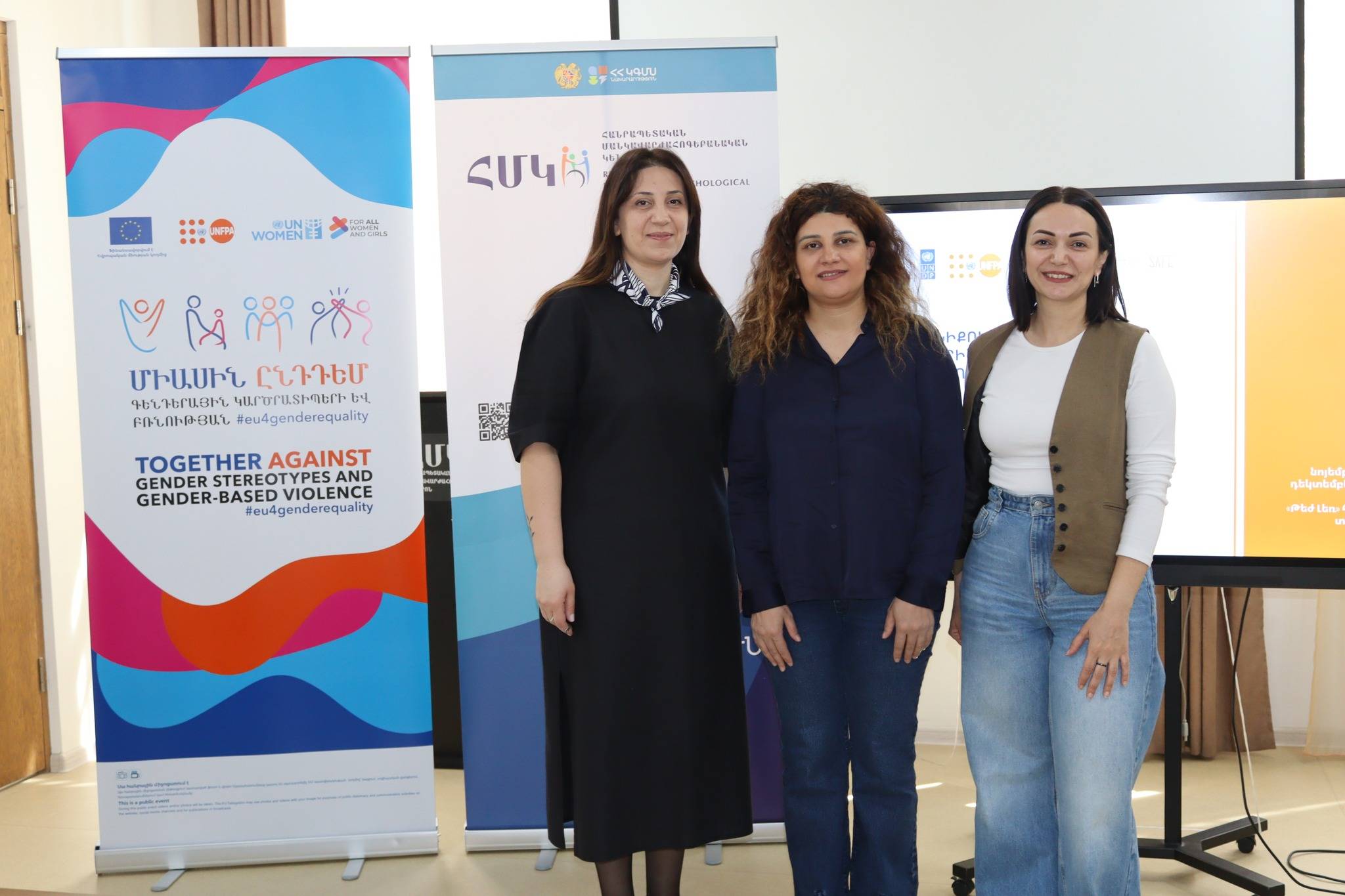
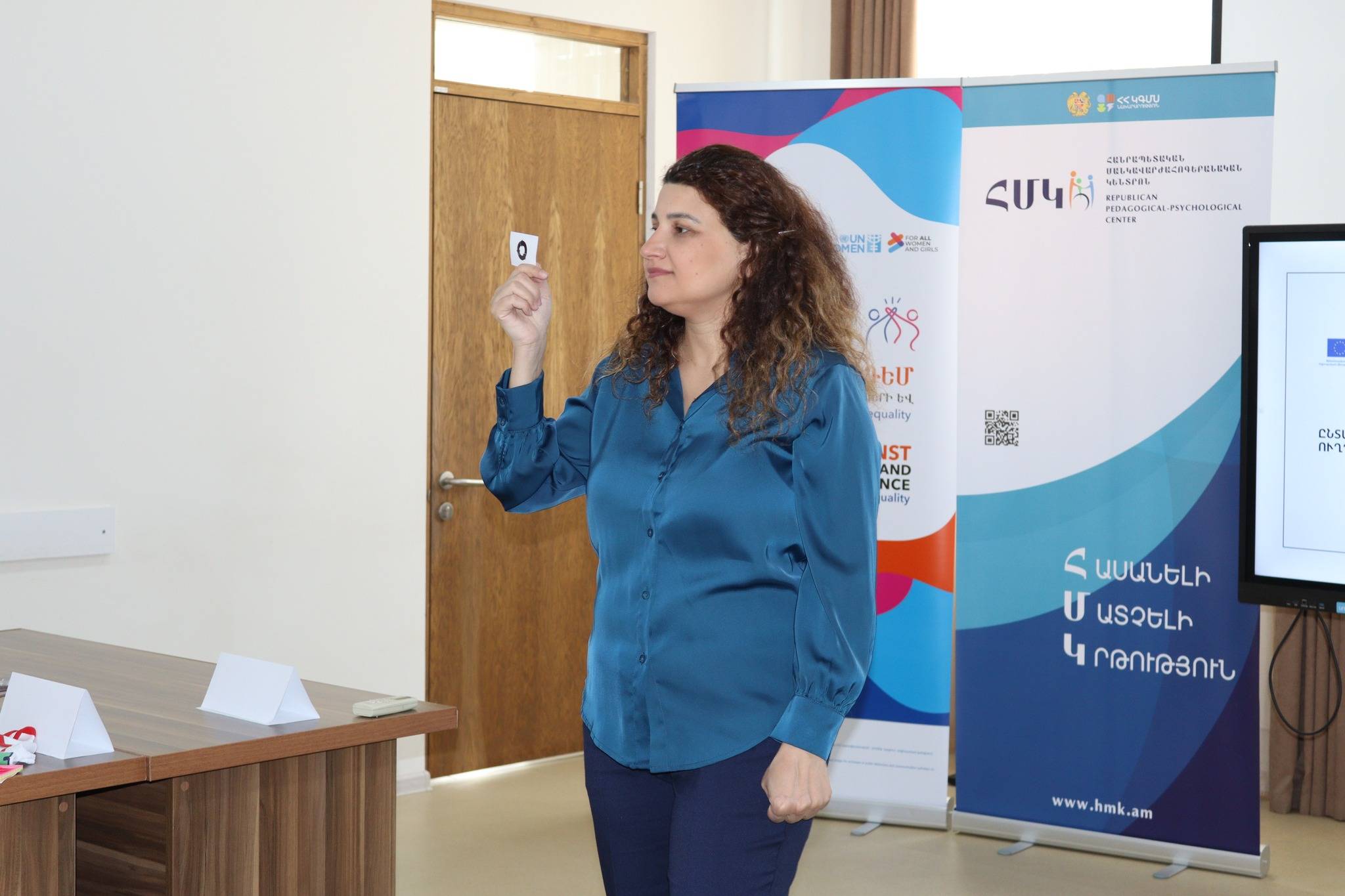
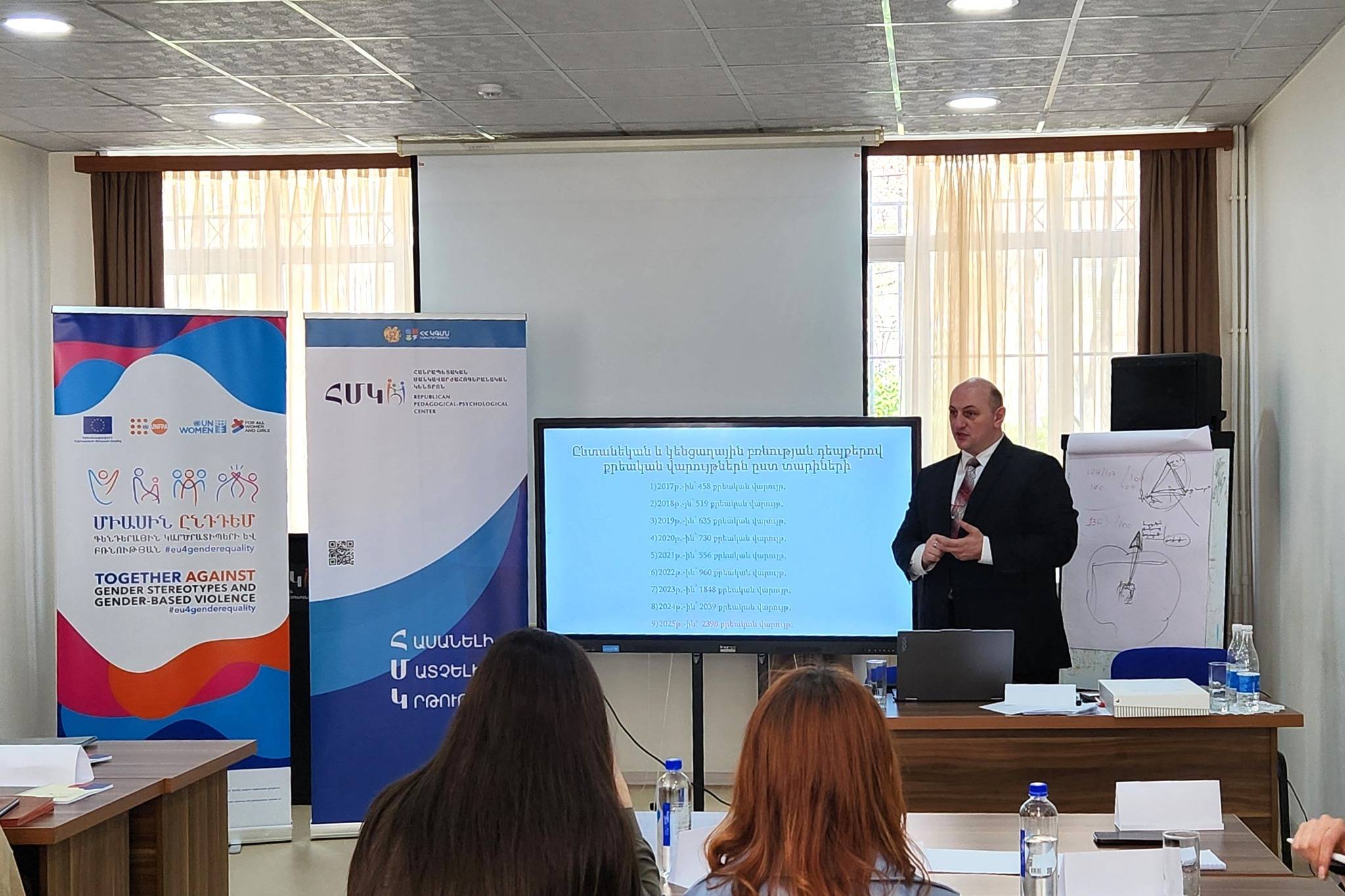
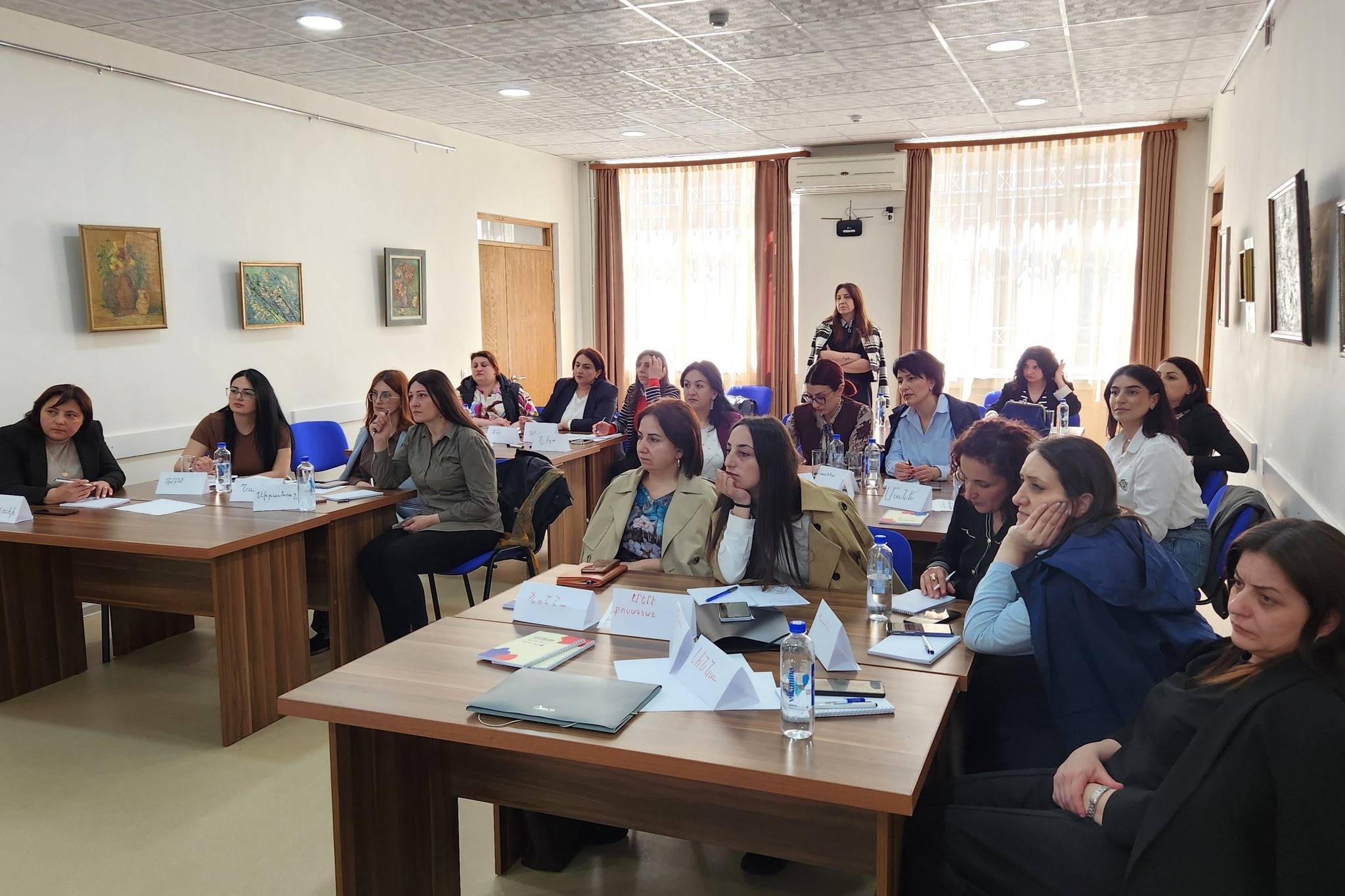
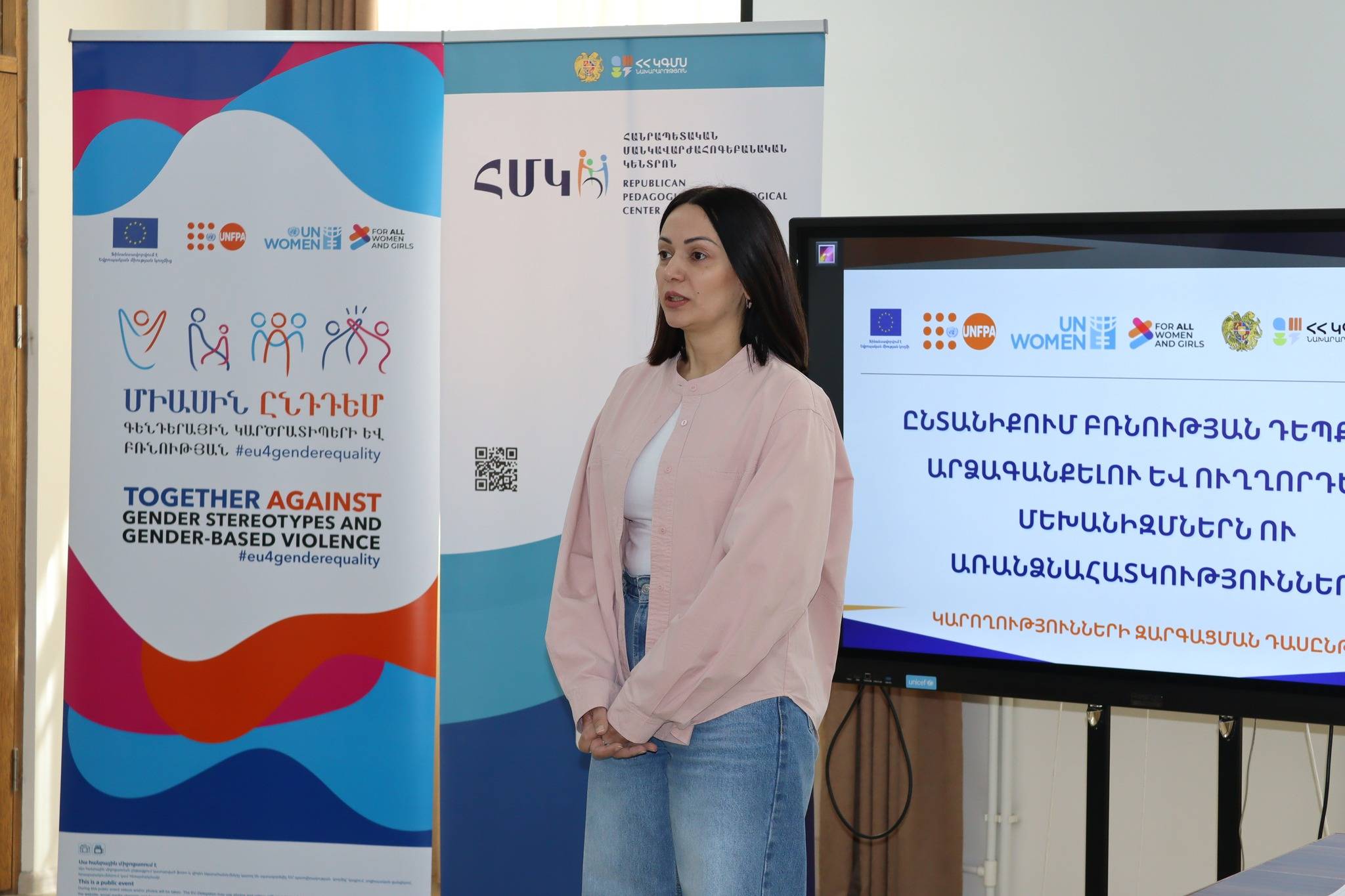

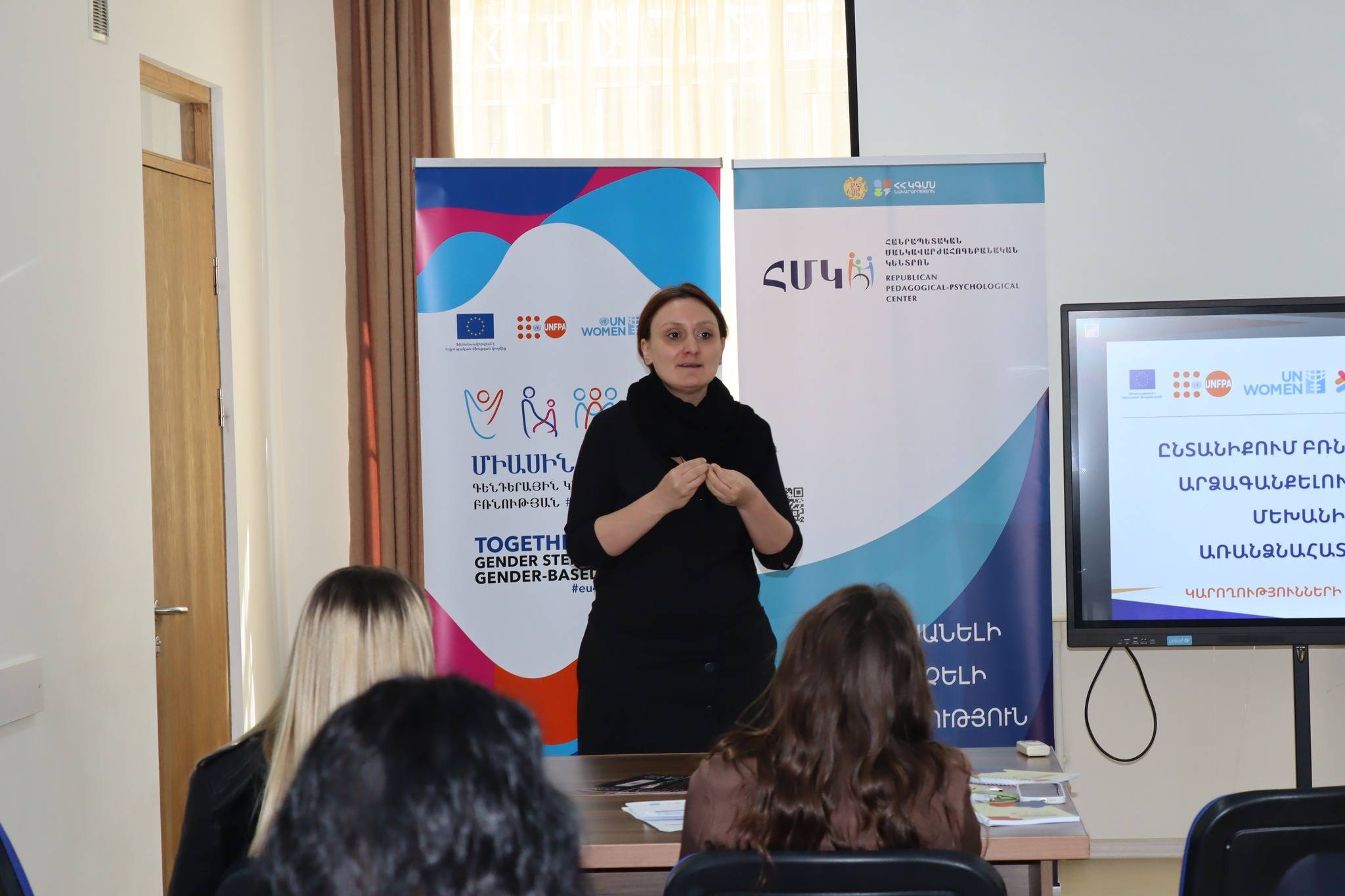













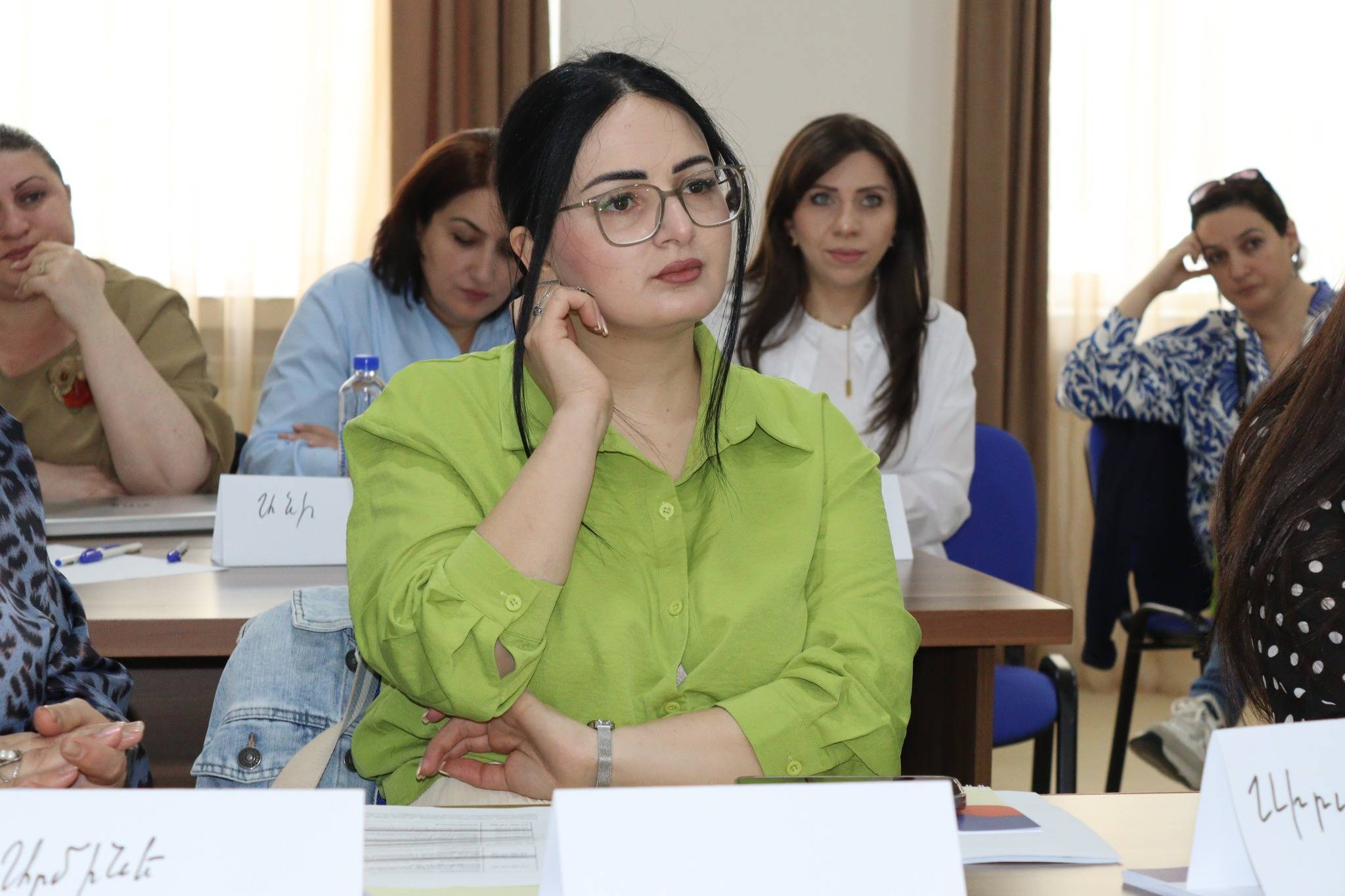
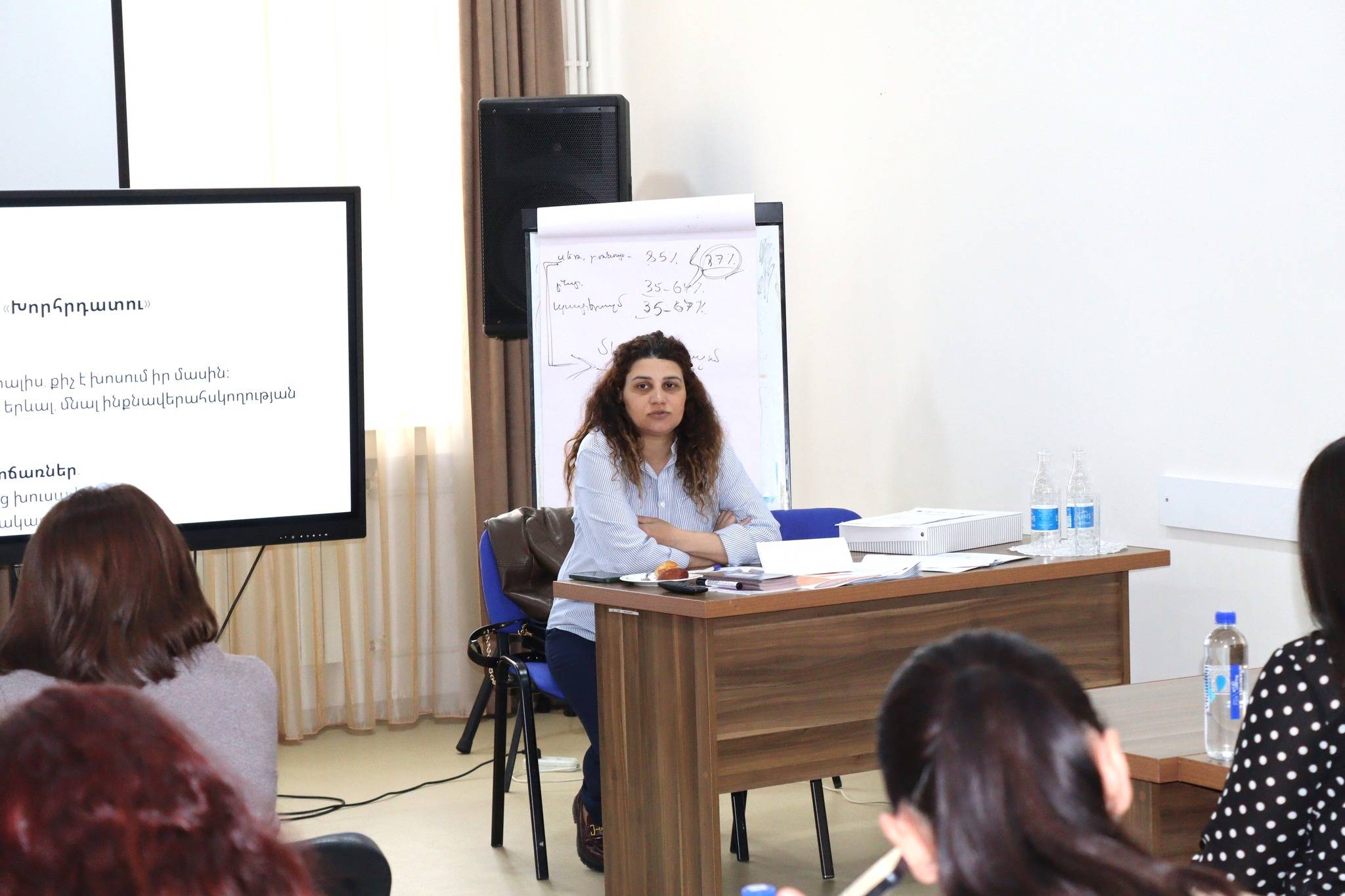



The training courses on “MECHANISMS AND FEATURES OF RESPONDING TO AND DIRECTING INCIDENTS OF DOMESTIC VIOLENCE” implemented in cooperation with the Ministry of Education, Science, Culture and Sports of the Republic of Armenia, the Republican Pedagogical-Psychological Center, and the United Nations Population Fund (UNFPA) continue.
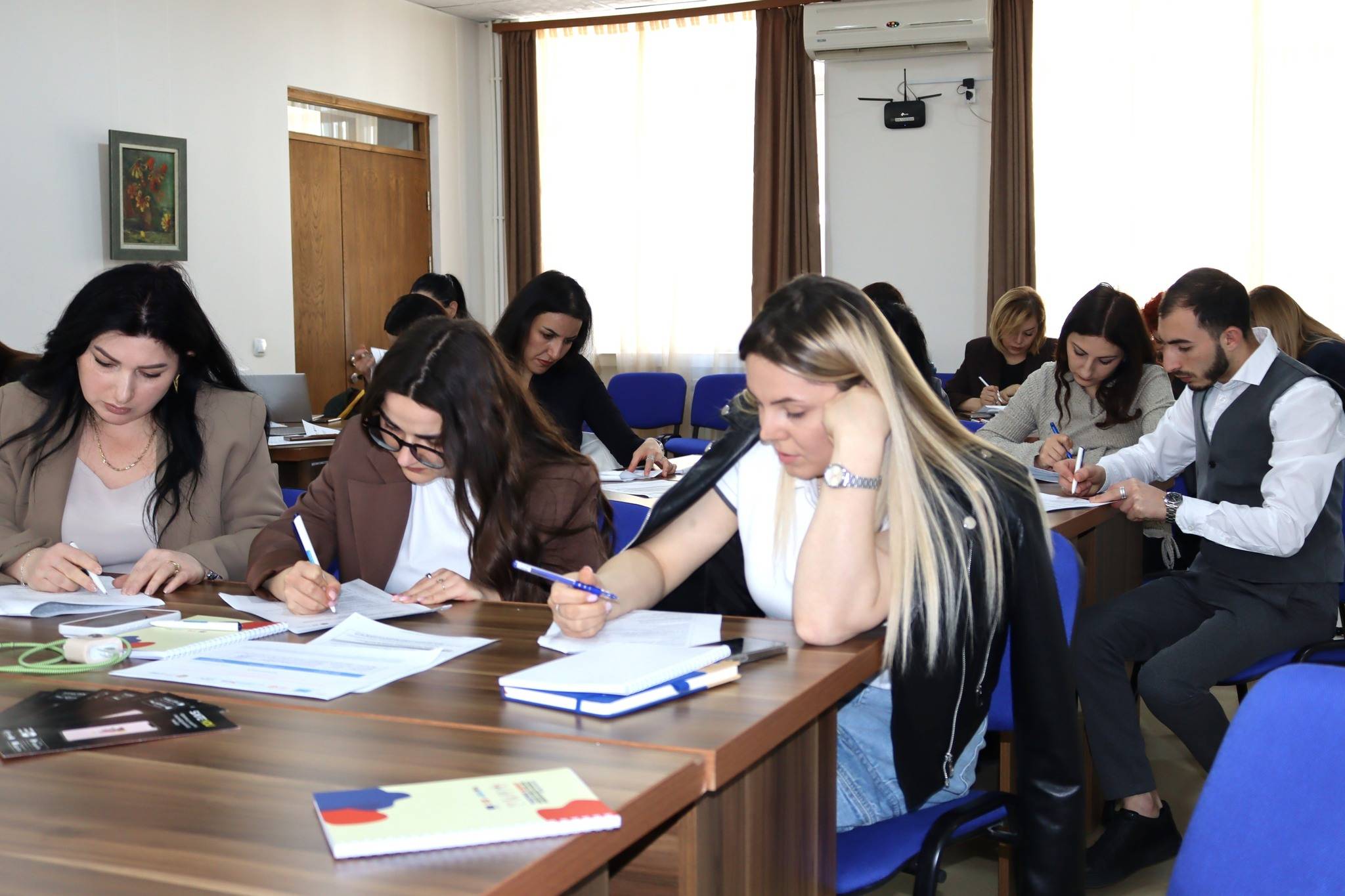
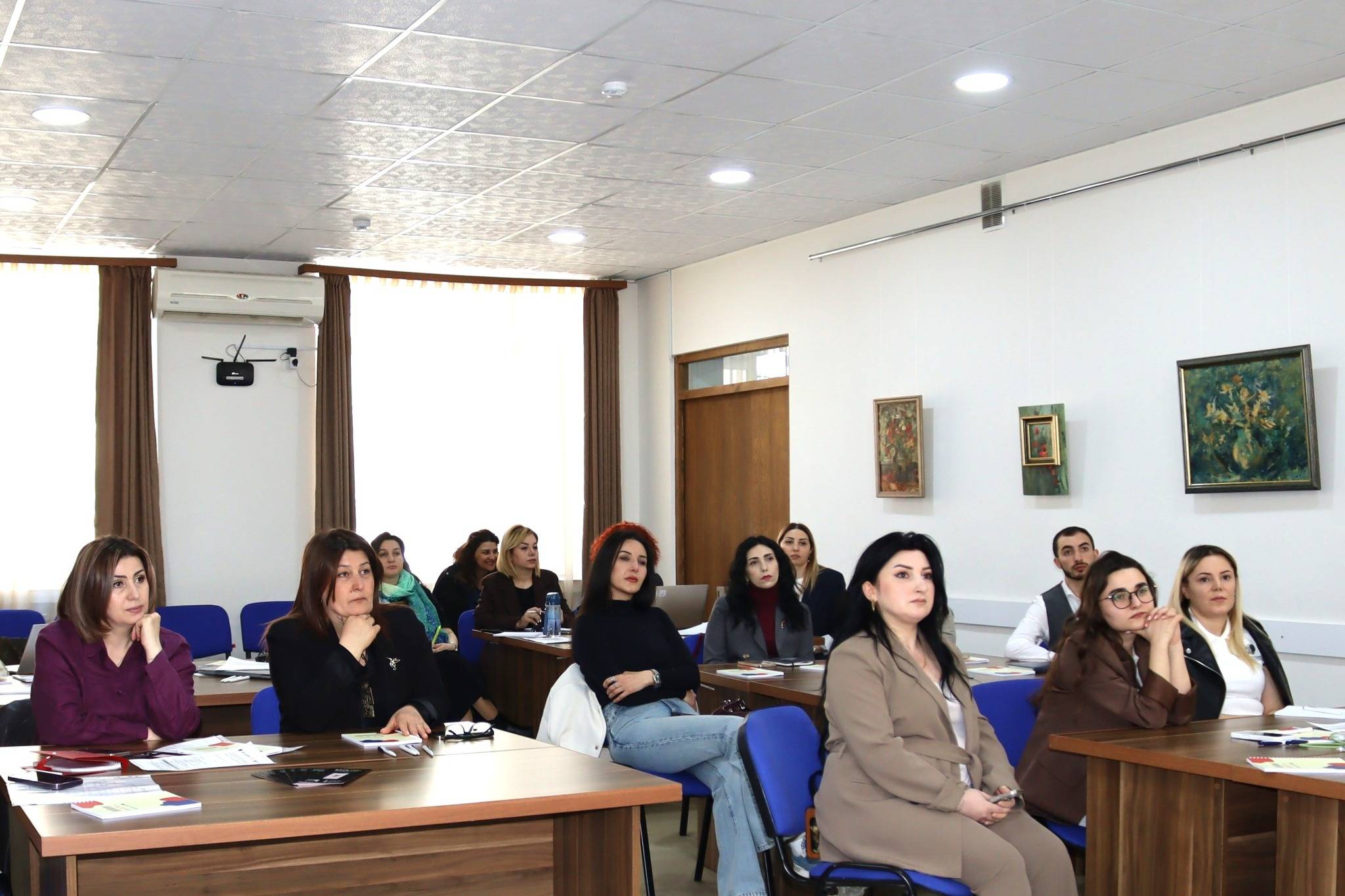
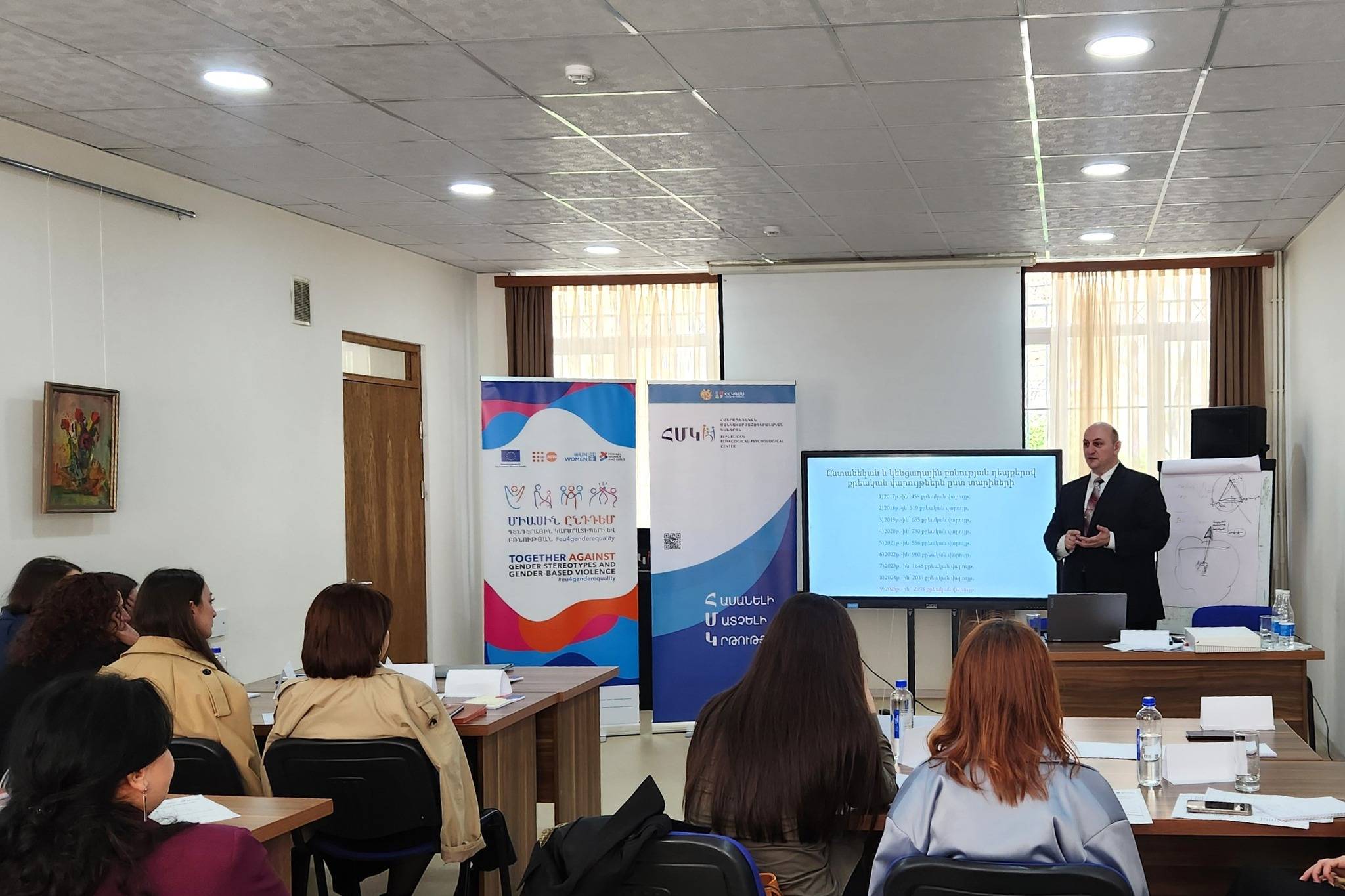
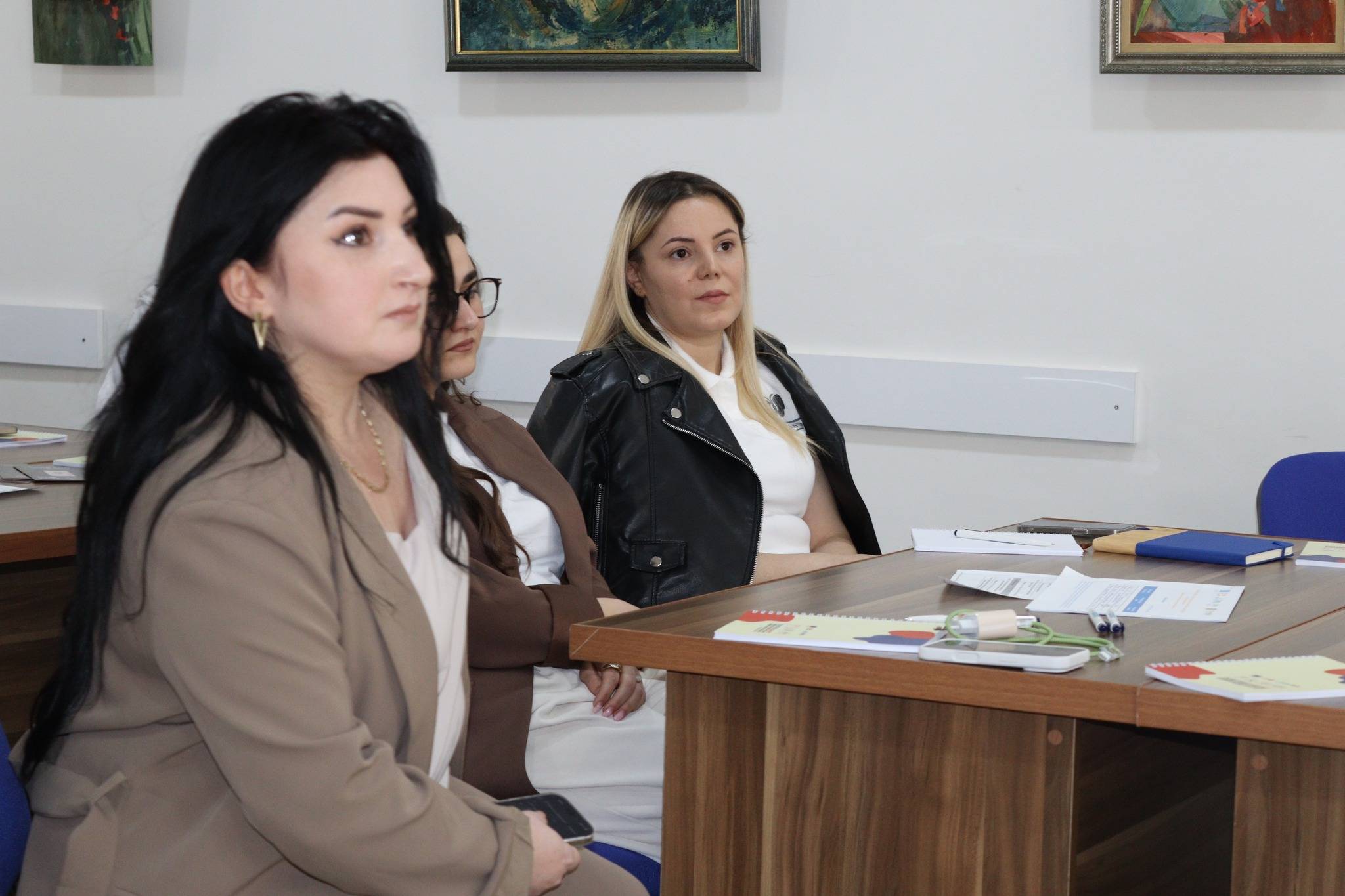
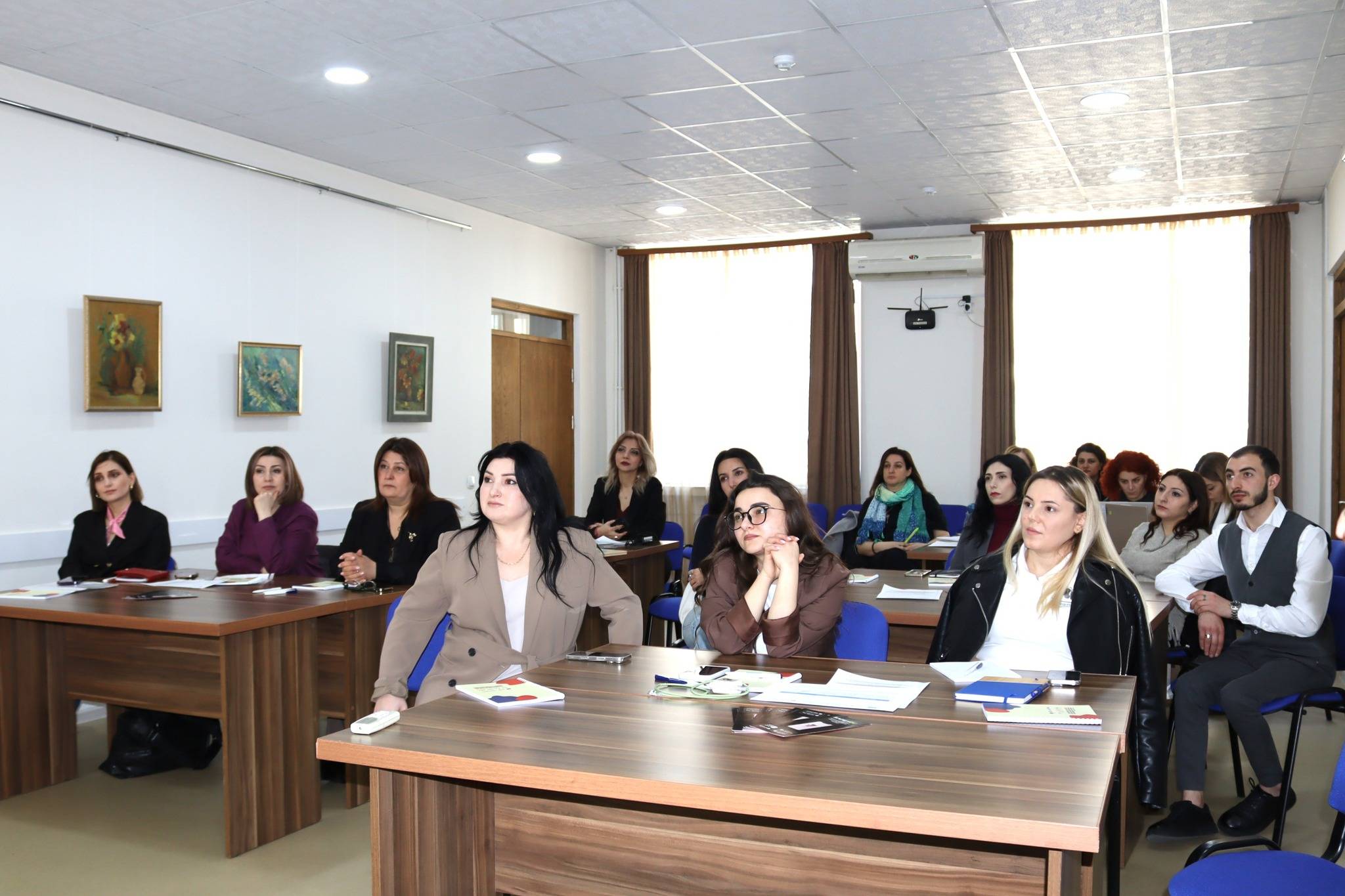
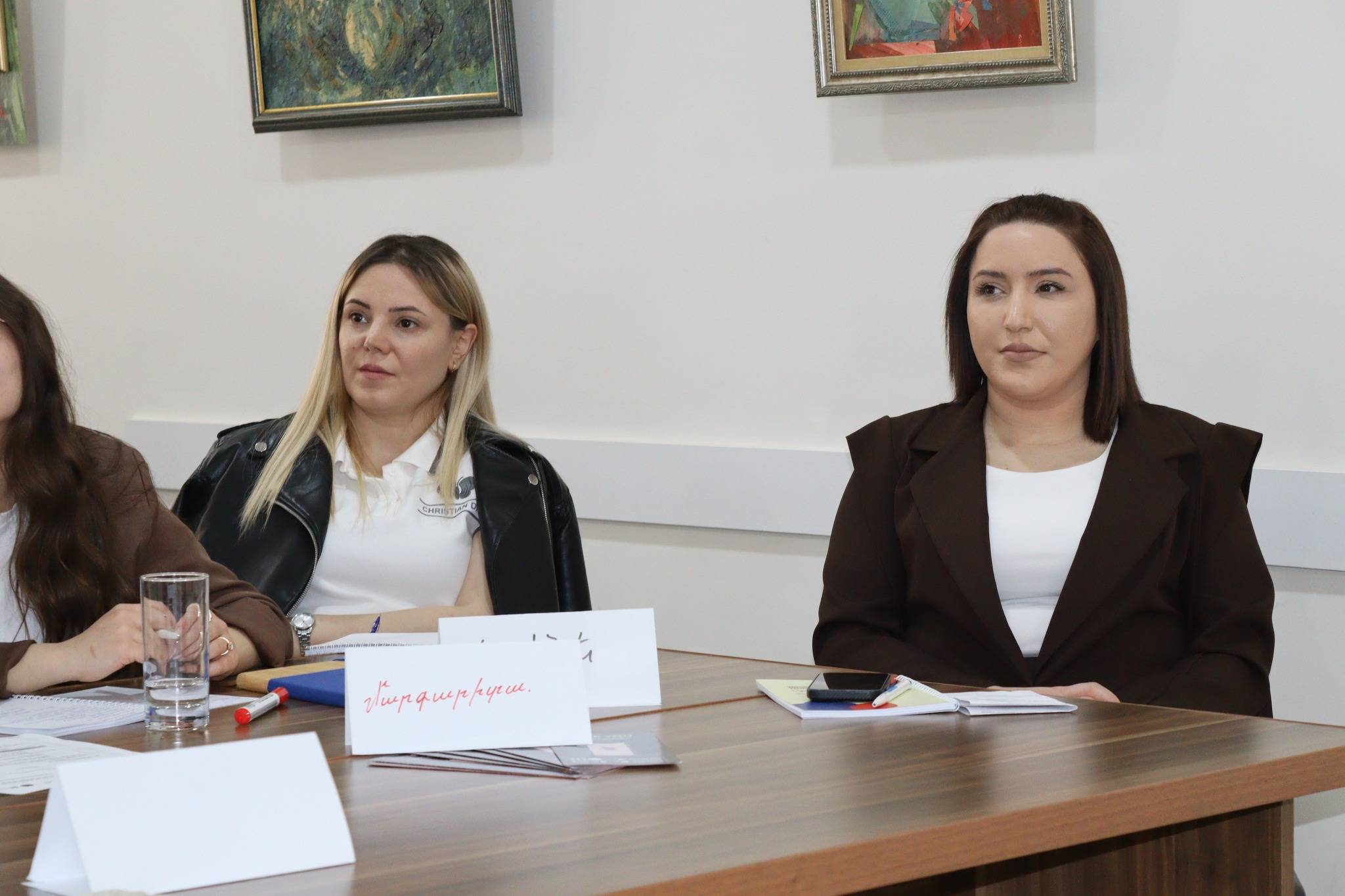
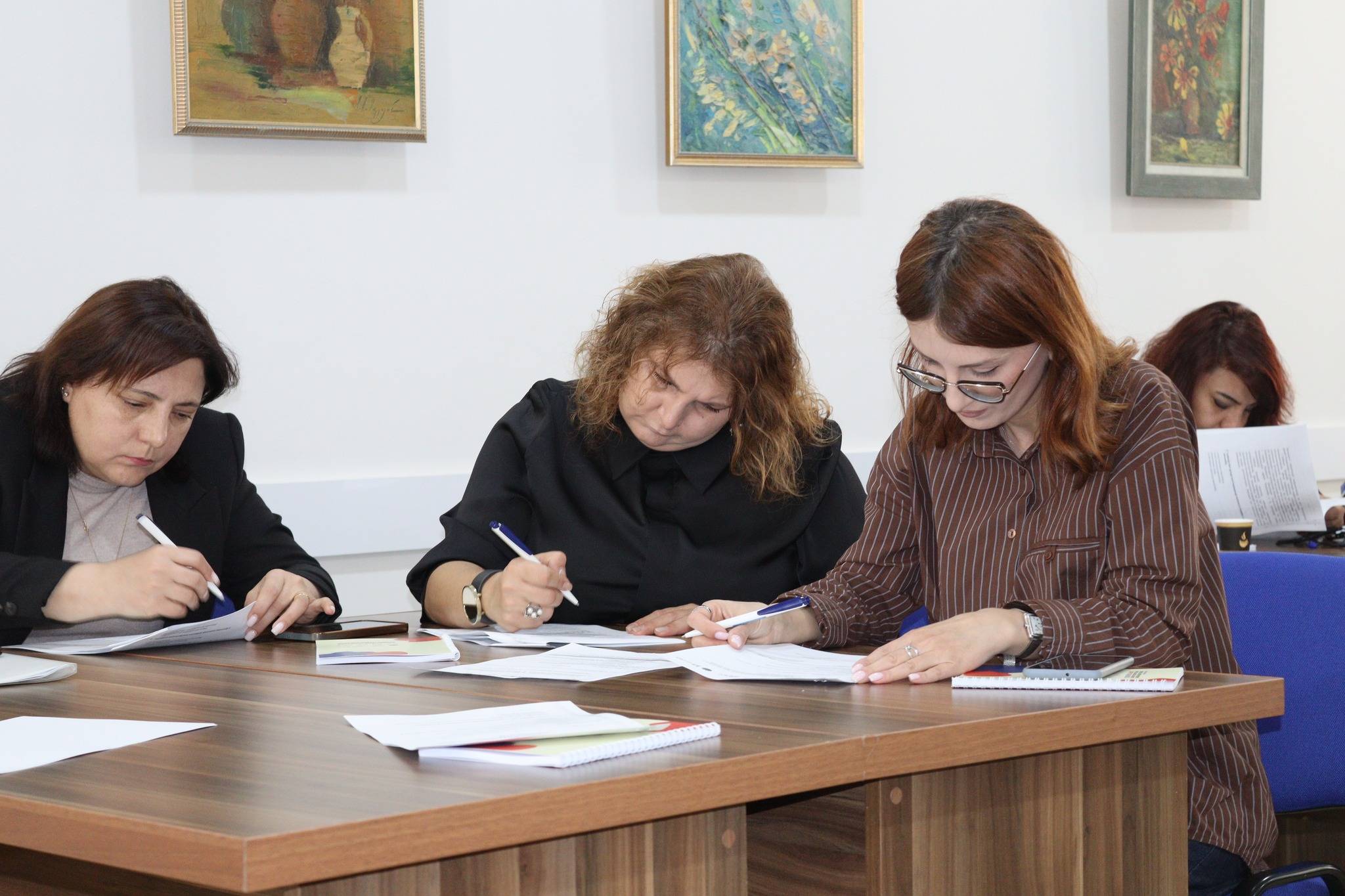
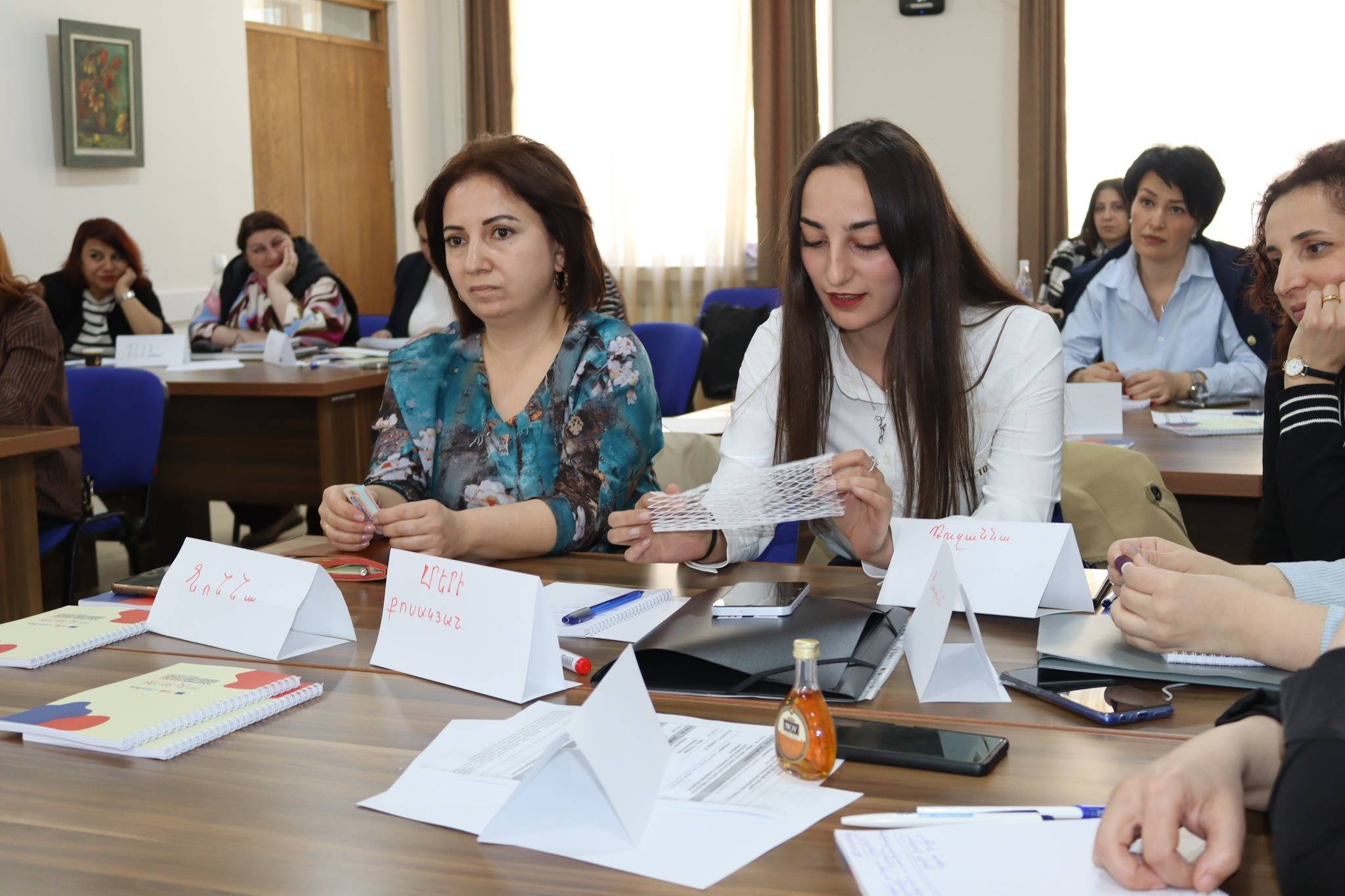
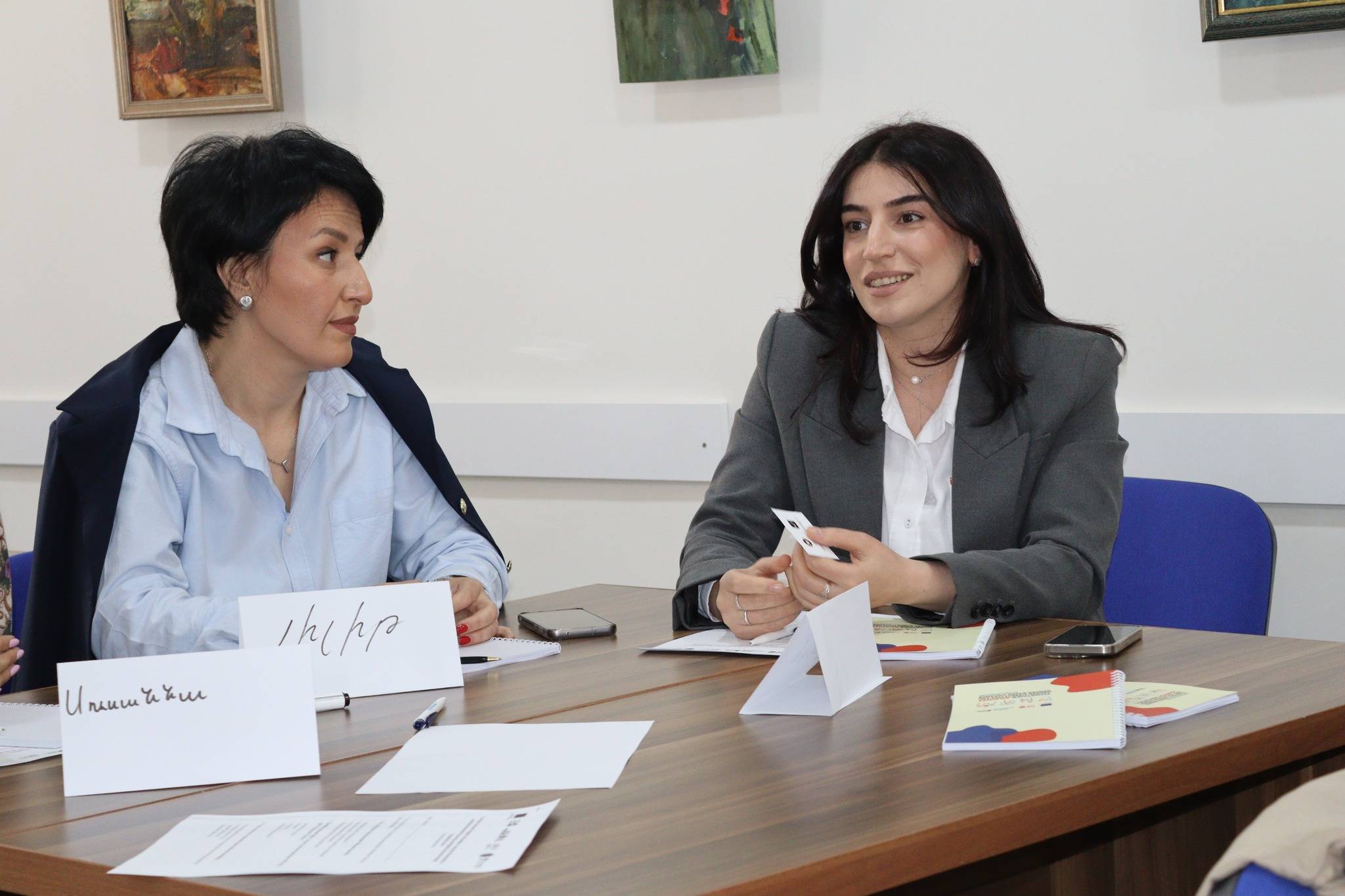
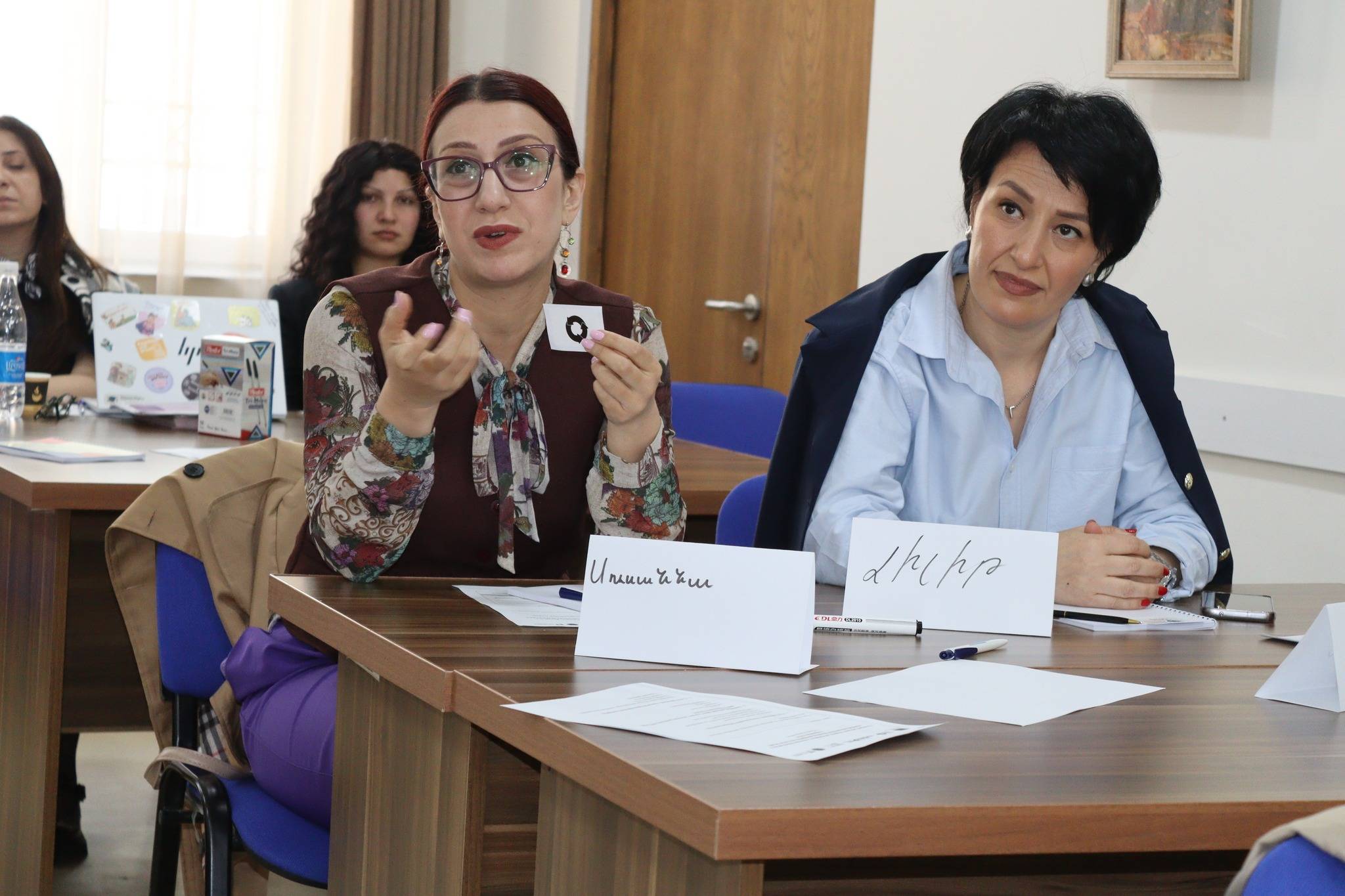
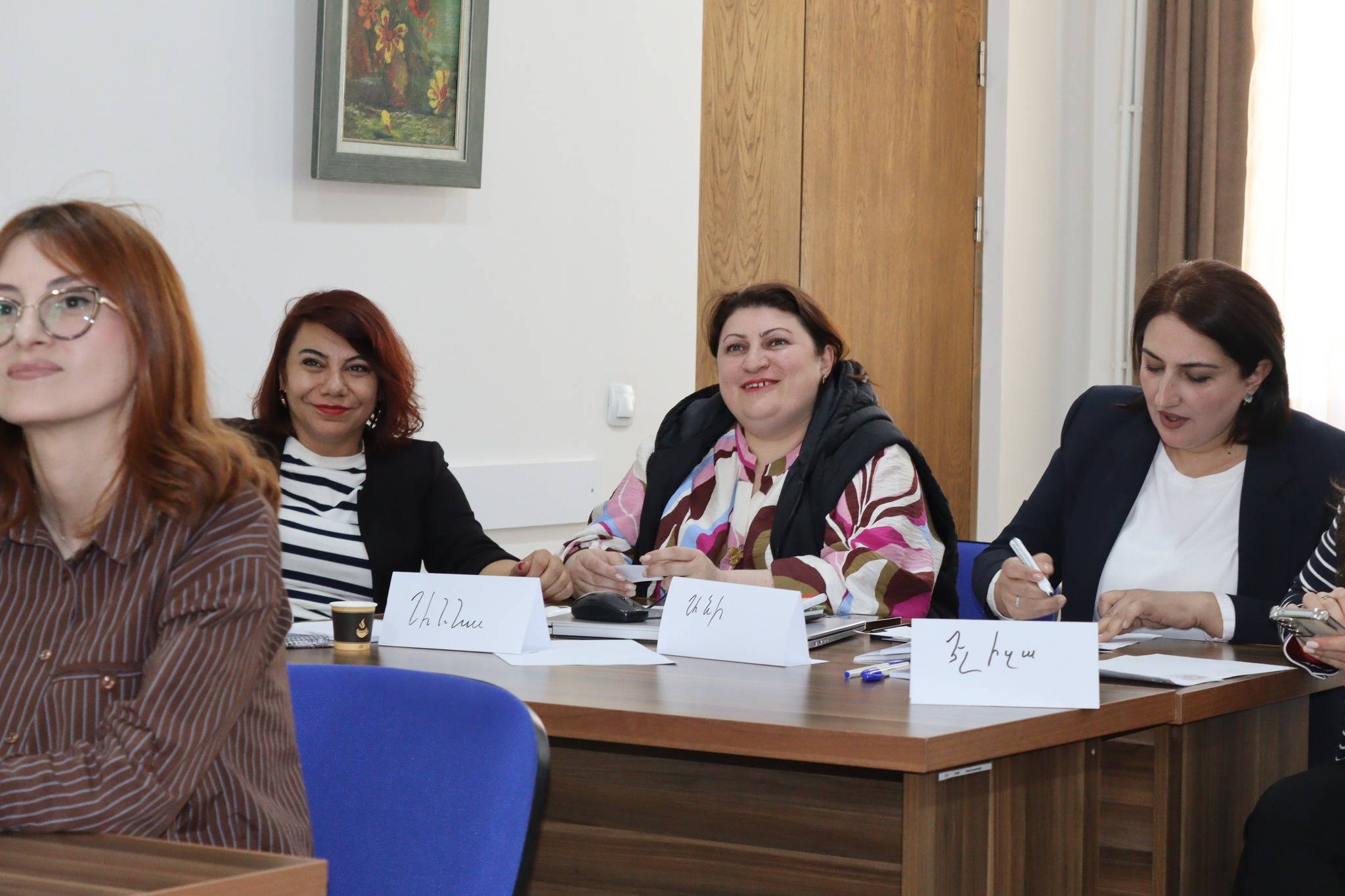
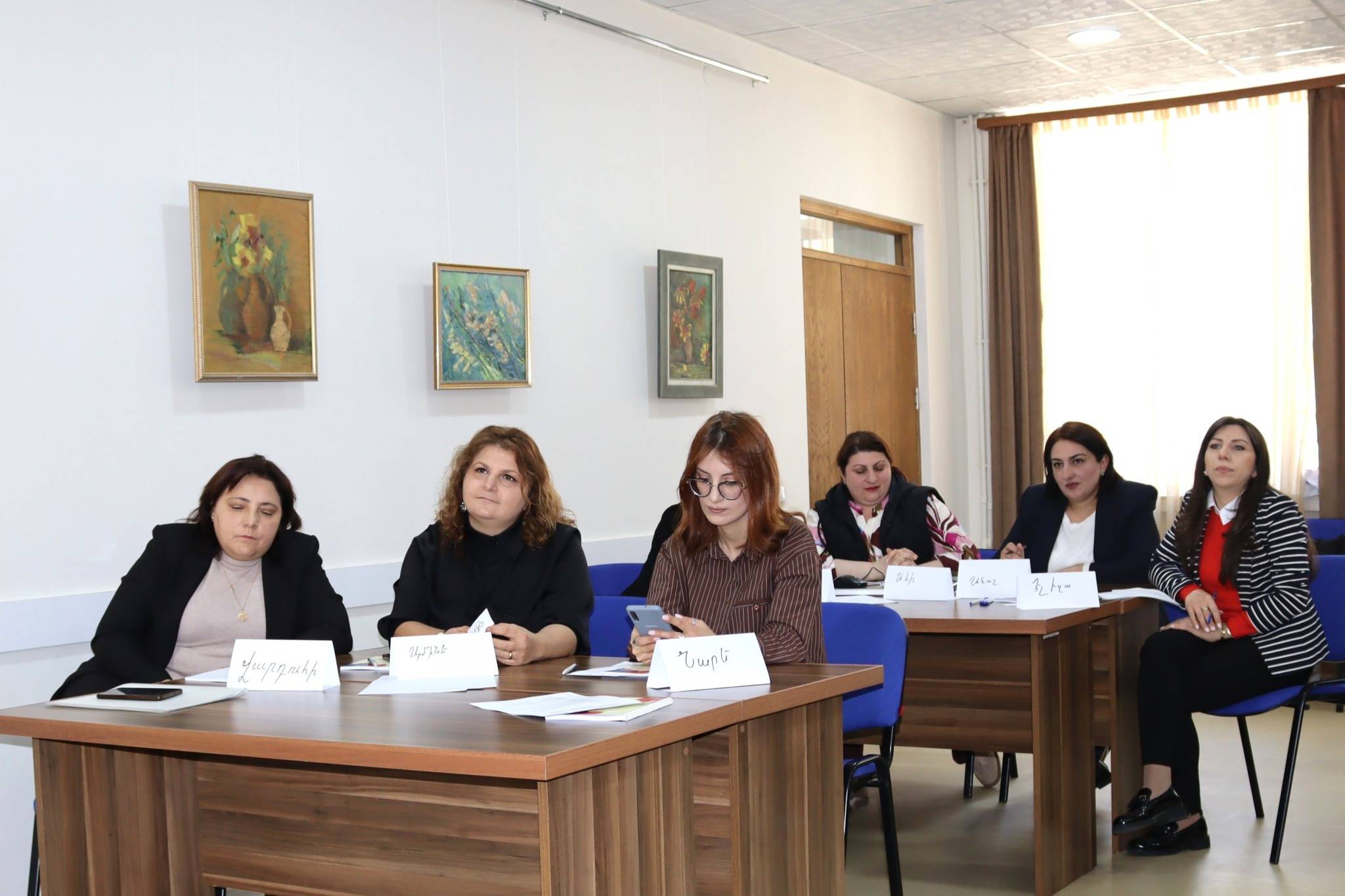
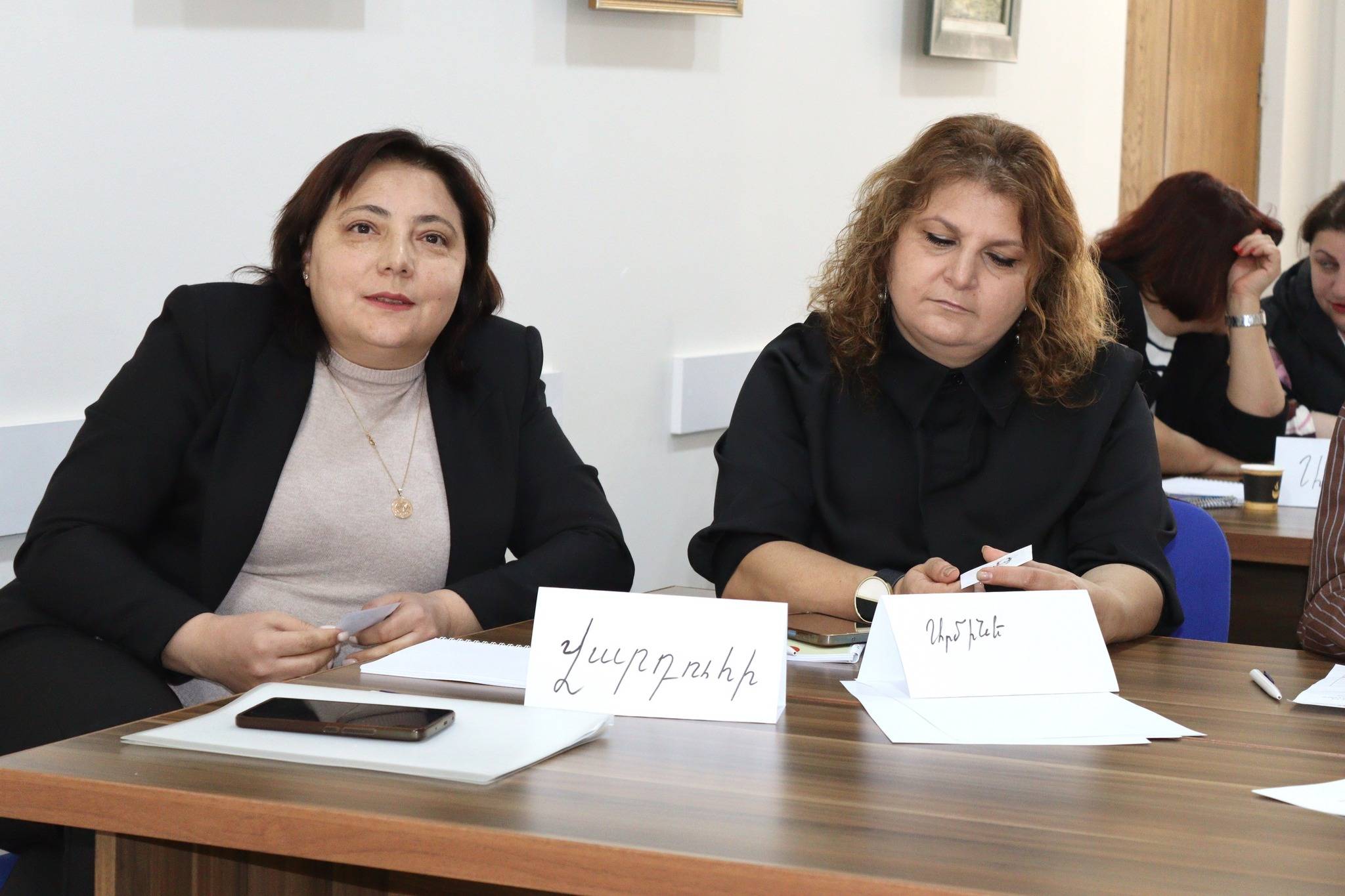
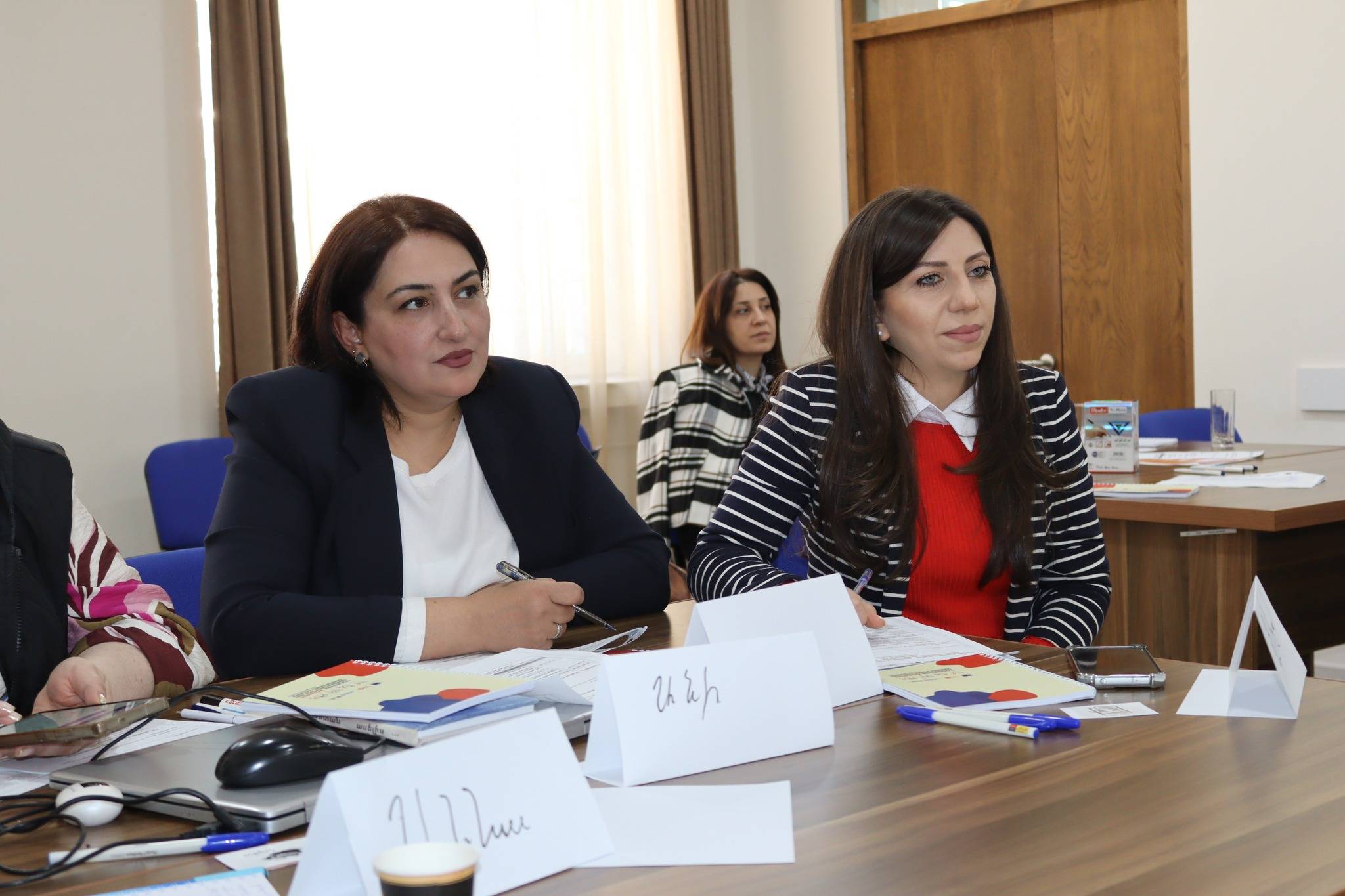
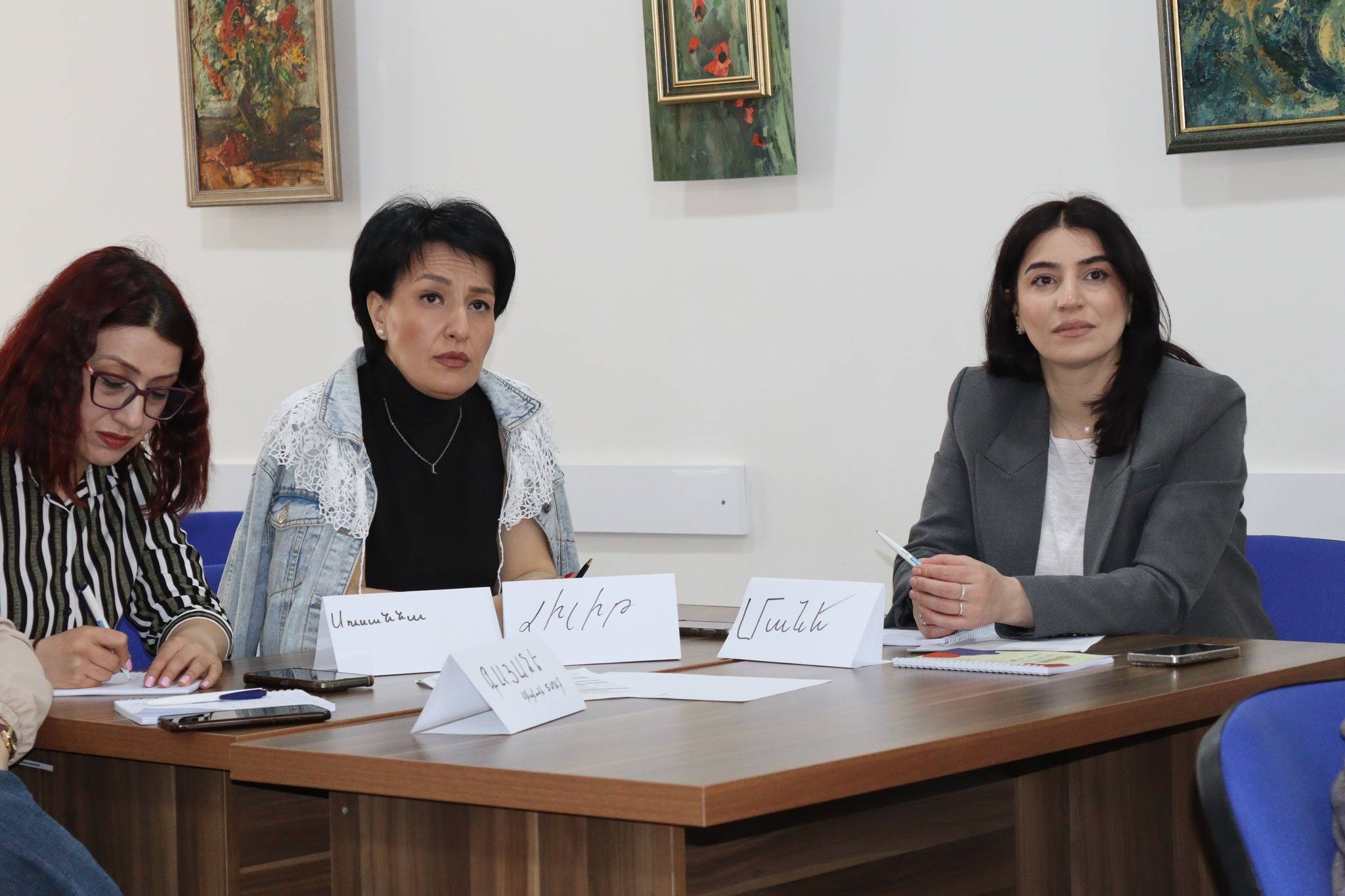
On April 16-17 and 22-23, 2026, two-day training courses on this topic were held at the Republican Pedagogical-Psychological Center for psychologists from the Territorial Pedagogical-Psychological Support Centers of the Republic of Armenia.
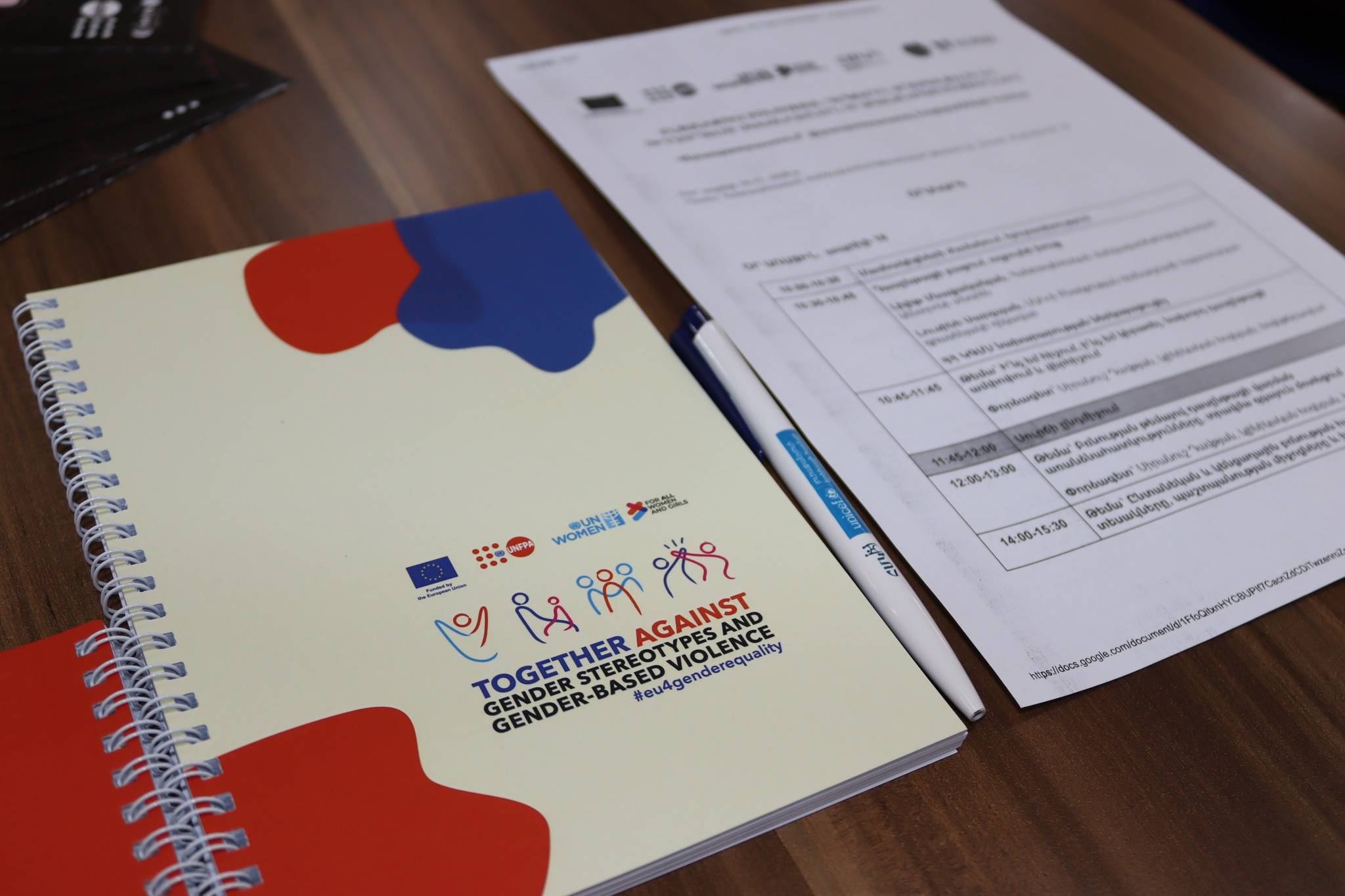
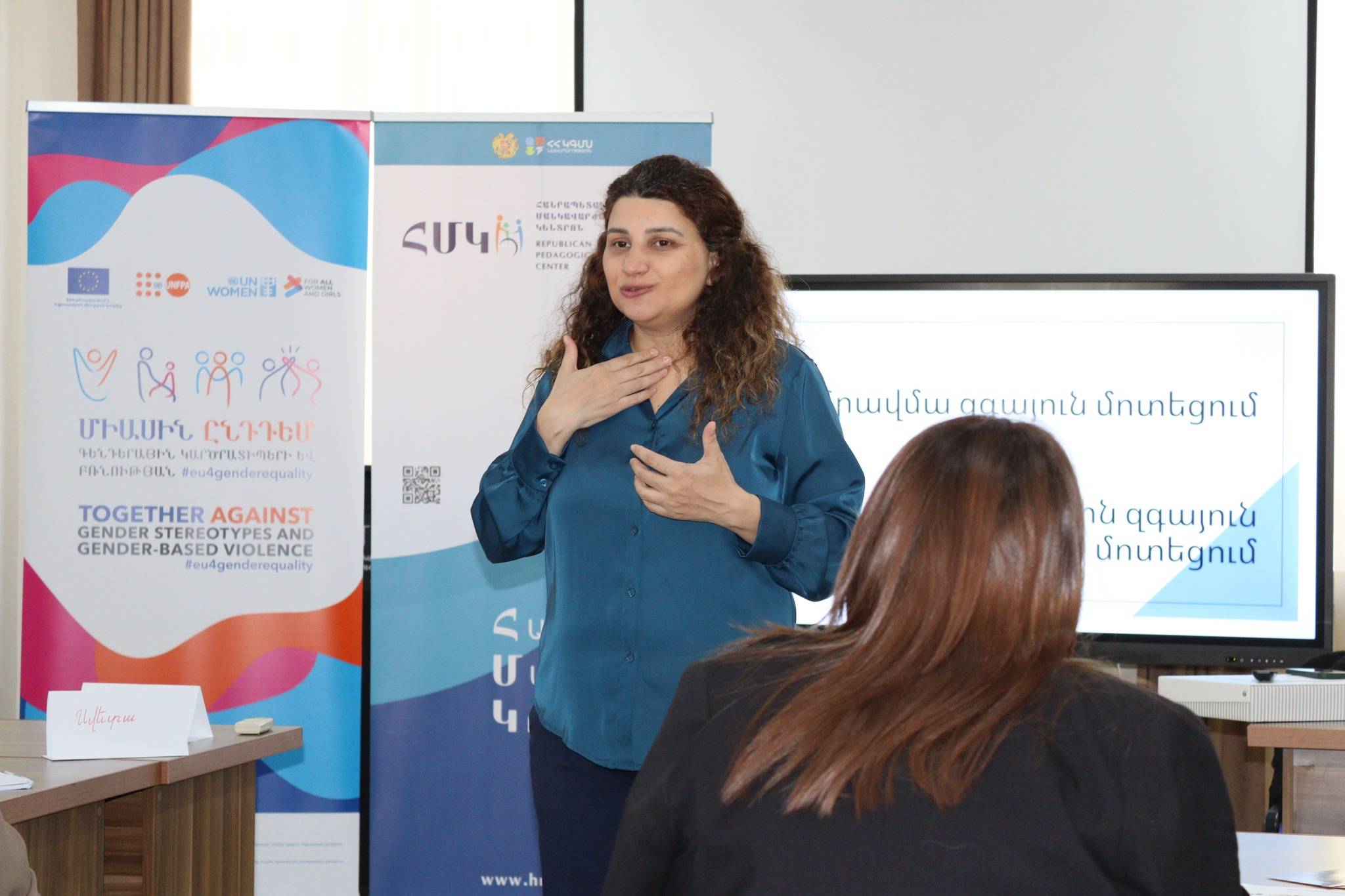
This initiative is being carried out within the framework of the second phase of the “EU 4 Gender Equality: Together Against Gender Stereotypes and Gender-Based Violence” Programme, funded by the European Union in Armenia and implemented by UN Women Armenia and UNFPA.
The aim of the Training Course is to contribute to the development of the professional skills of psychologists, to provide them with effective mechanisms for identifying, responding to, and directing cases of domestic and family violence.
The trainers were experts David Tumasyan, PhD in Law, Associate Professor, Attorney and Siranush Davtyan, a Clinical Psychologist and Psychotherapist.
The key topics of the Training Course were related to the presentation of the psychological and legal aspects of domestic violence:
The participants were introduced to the types of domestic and family violence, means of protection, and the specific features of conducting training courses and interviews on this topic. They also examined the issues faced by people with difficulties, the mechanisms for identifying domestic and family violence, assessing its impact, and preventing its consequences.
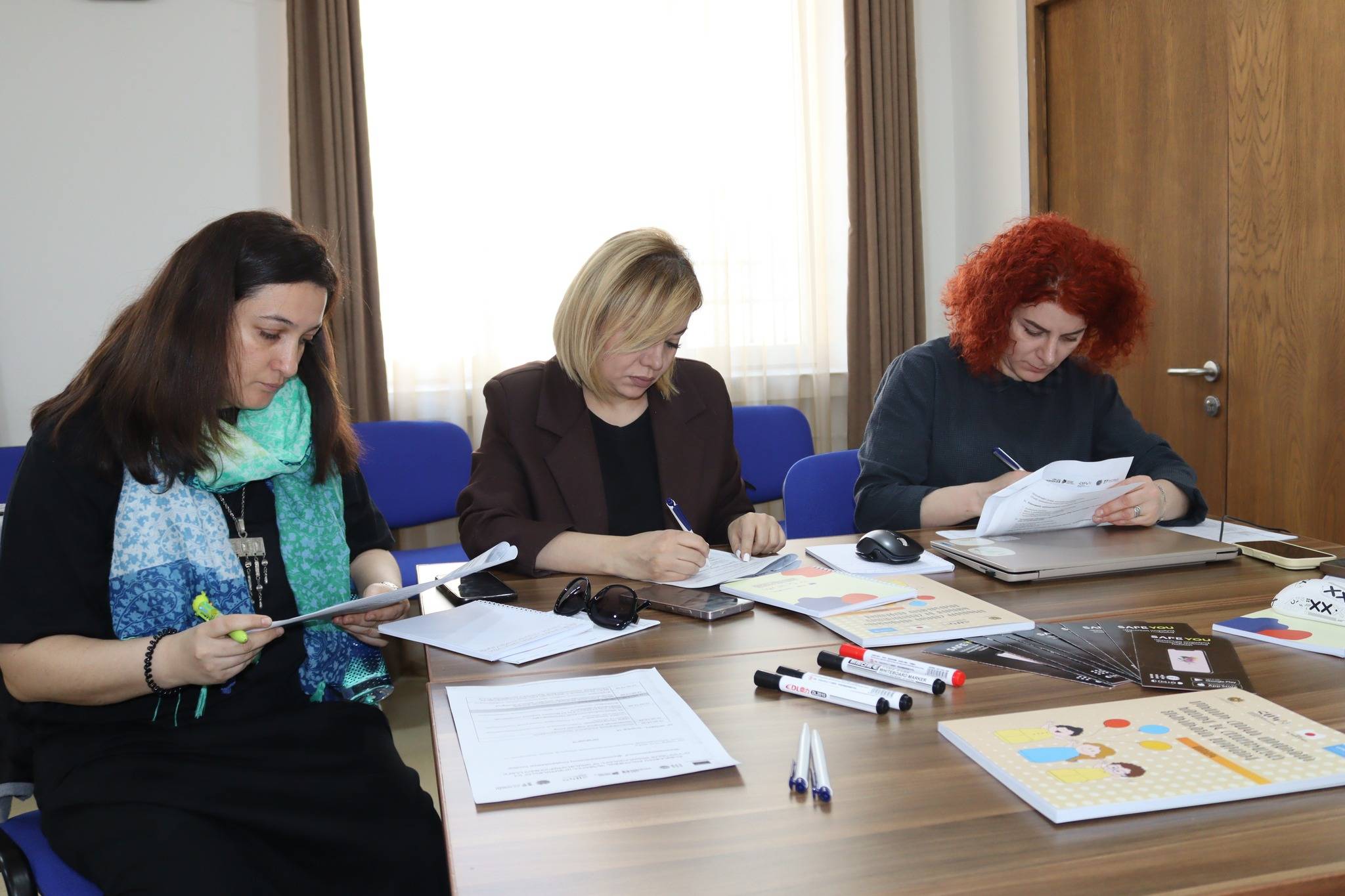
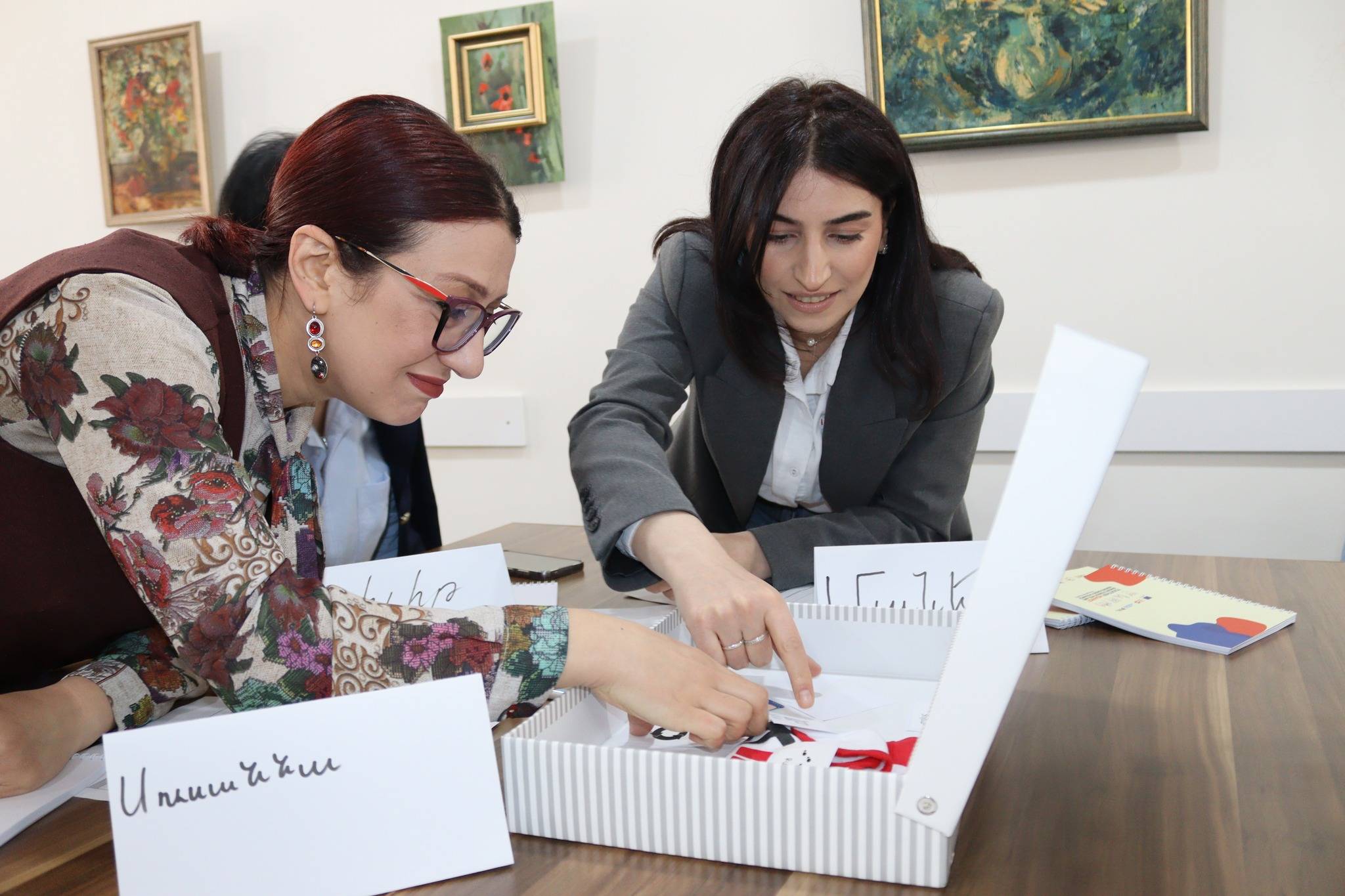
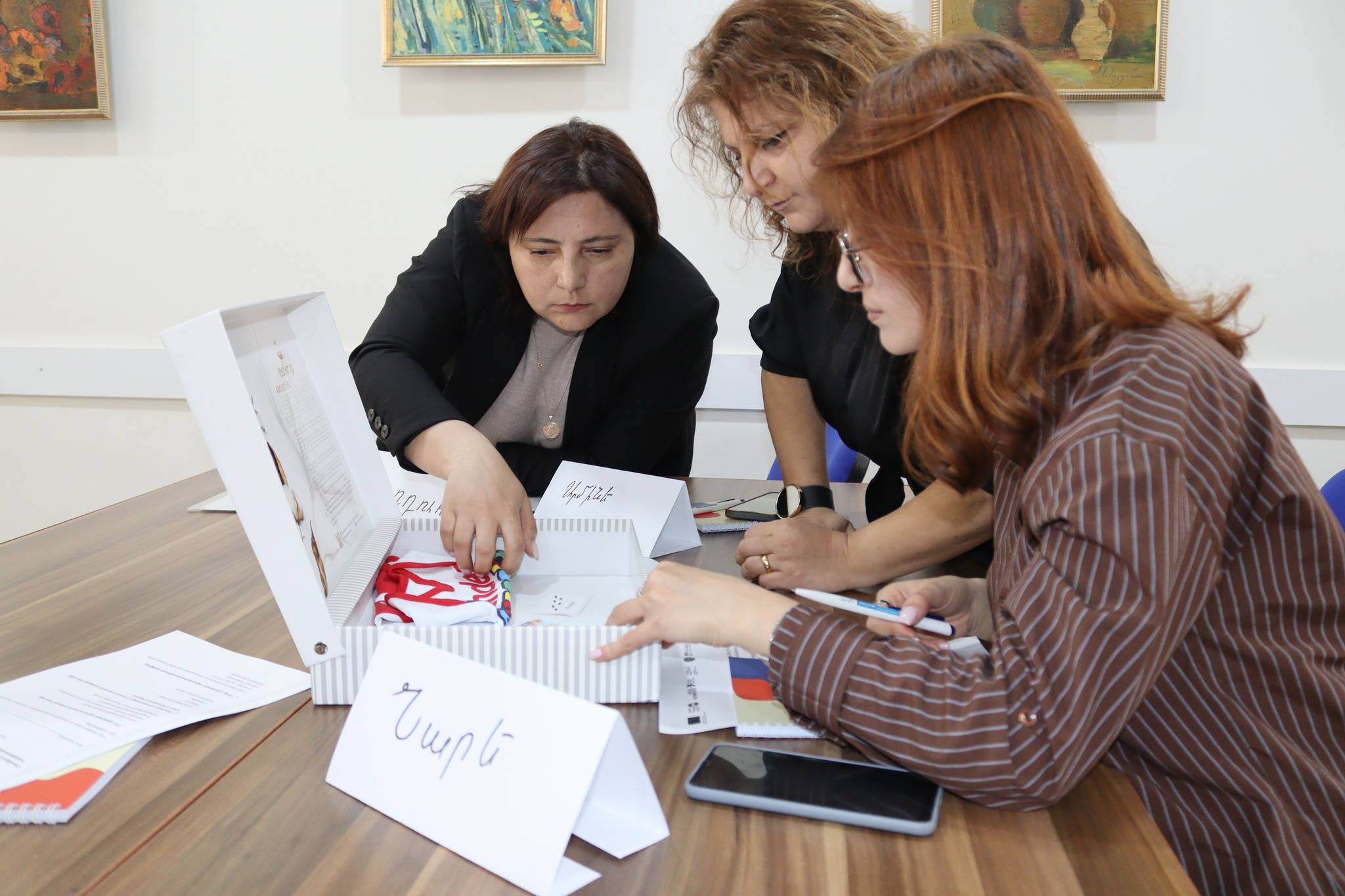
The Training Courses were combined with interactive exercises aimed at reformulating various statements related to the topic. Short training courses on the selected topic were also conducted, during which participants exchanged observations, viewpoints, and professional experience.
05.05.2026