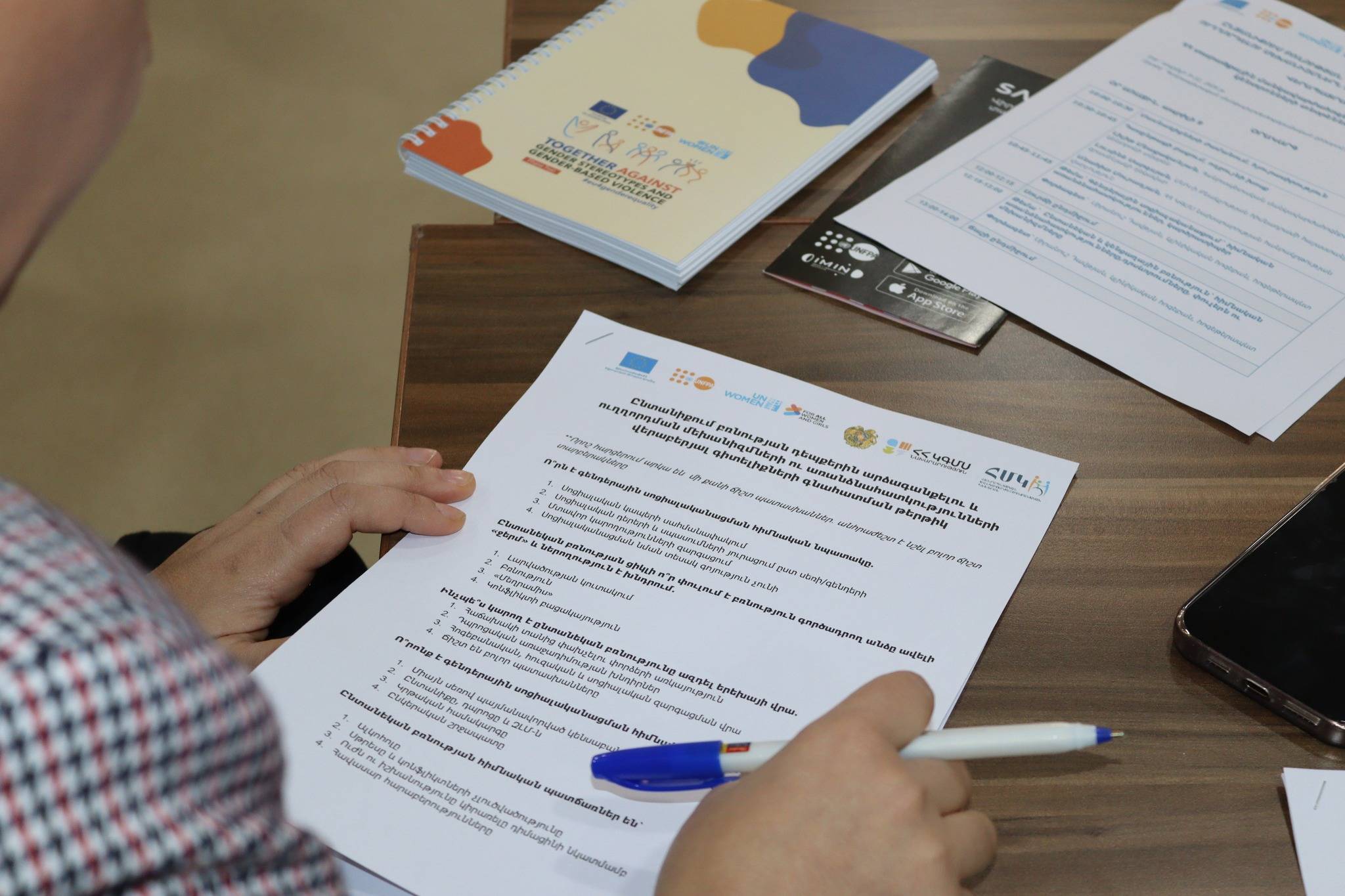





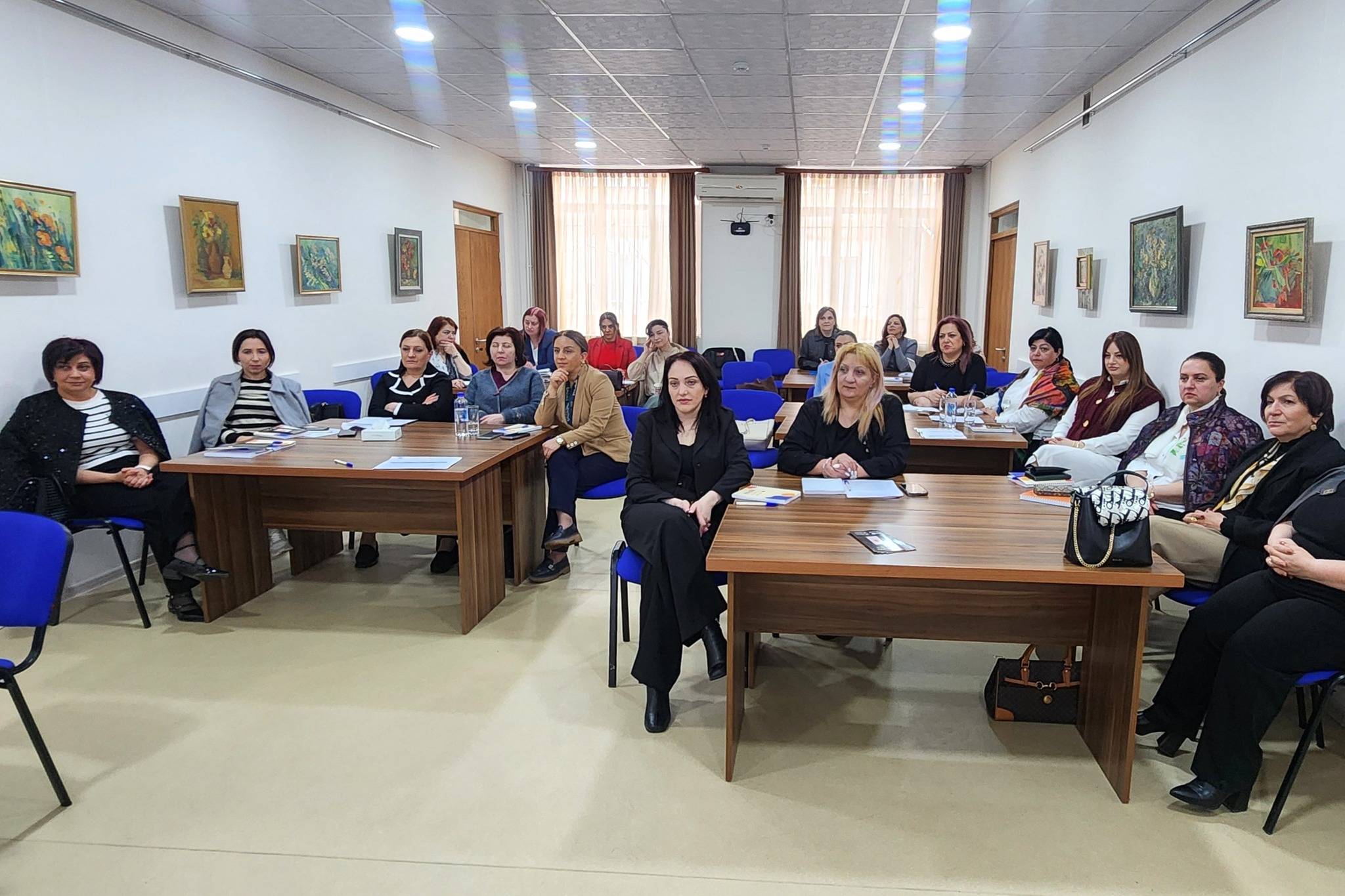

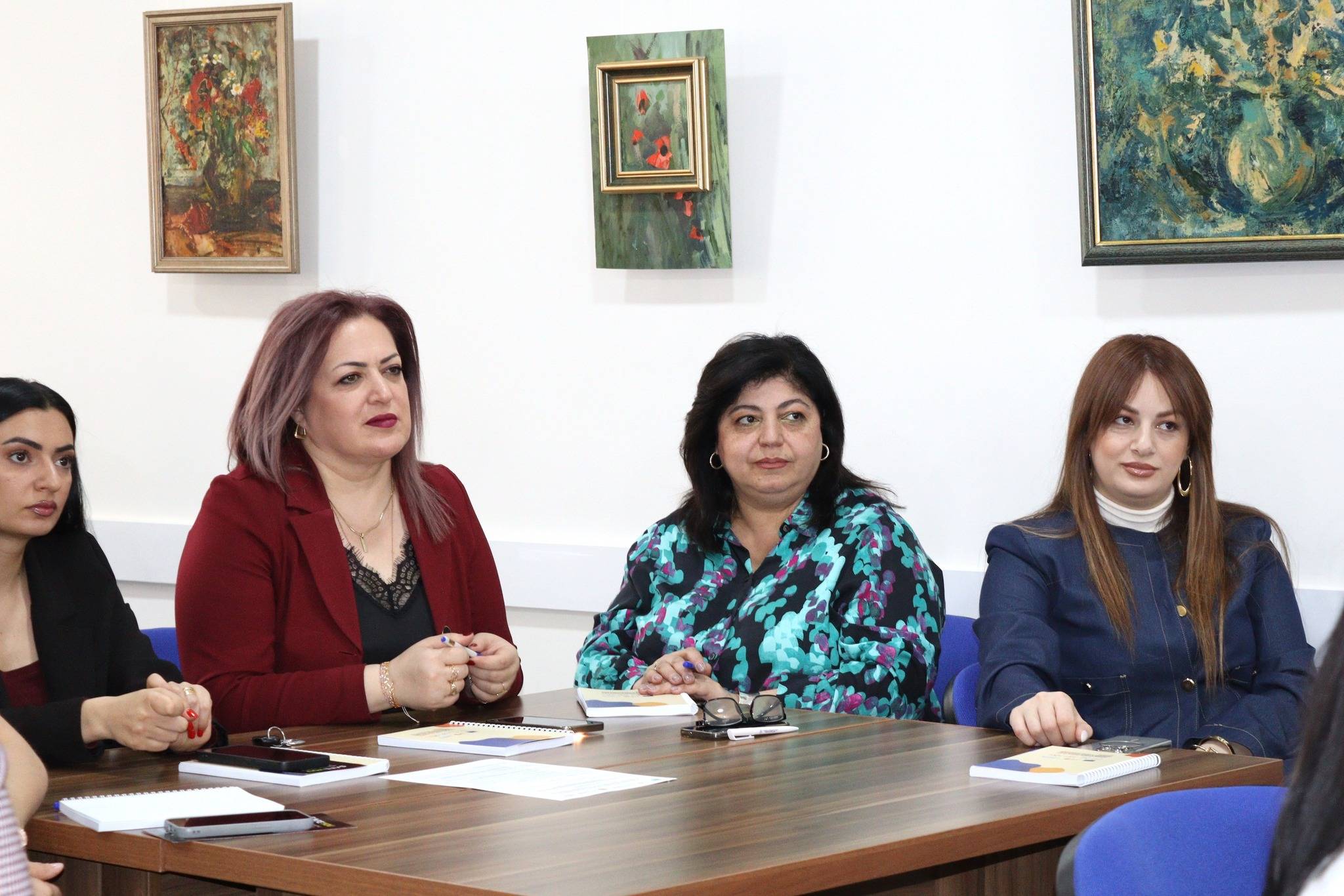
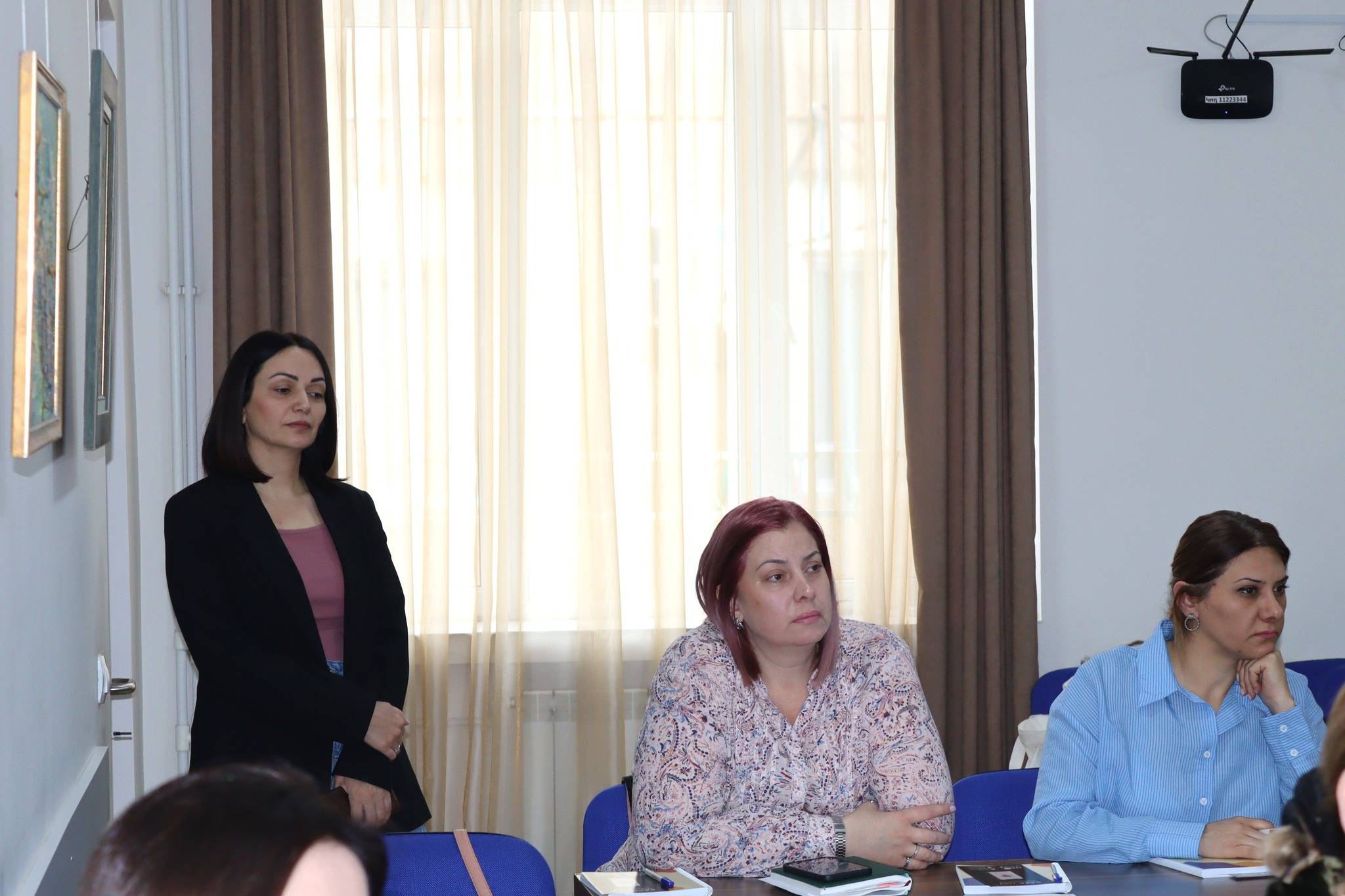


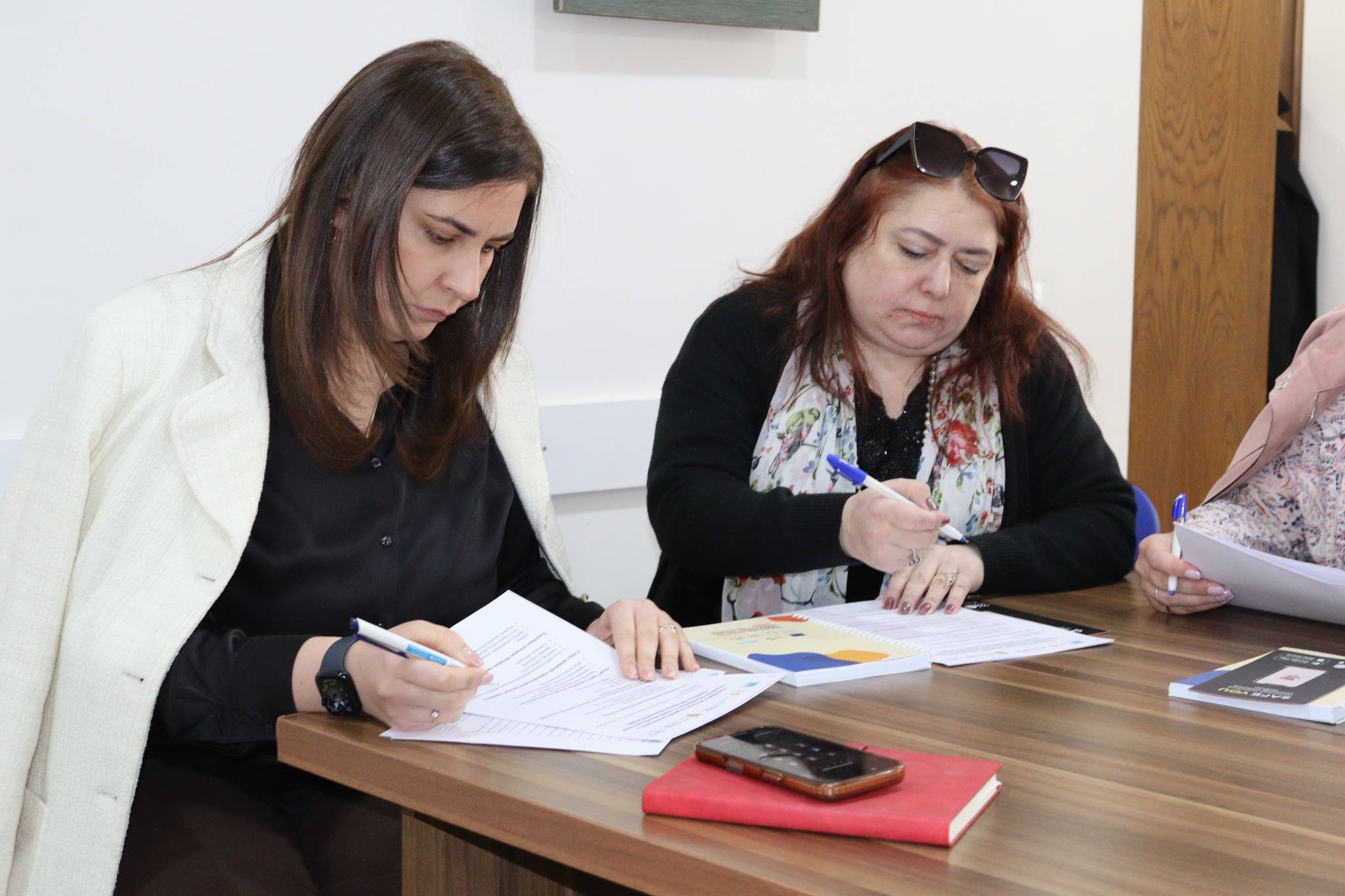


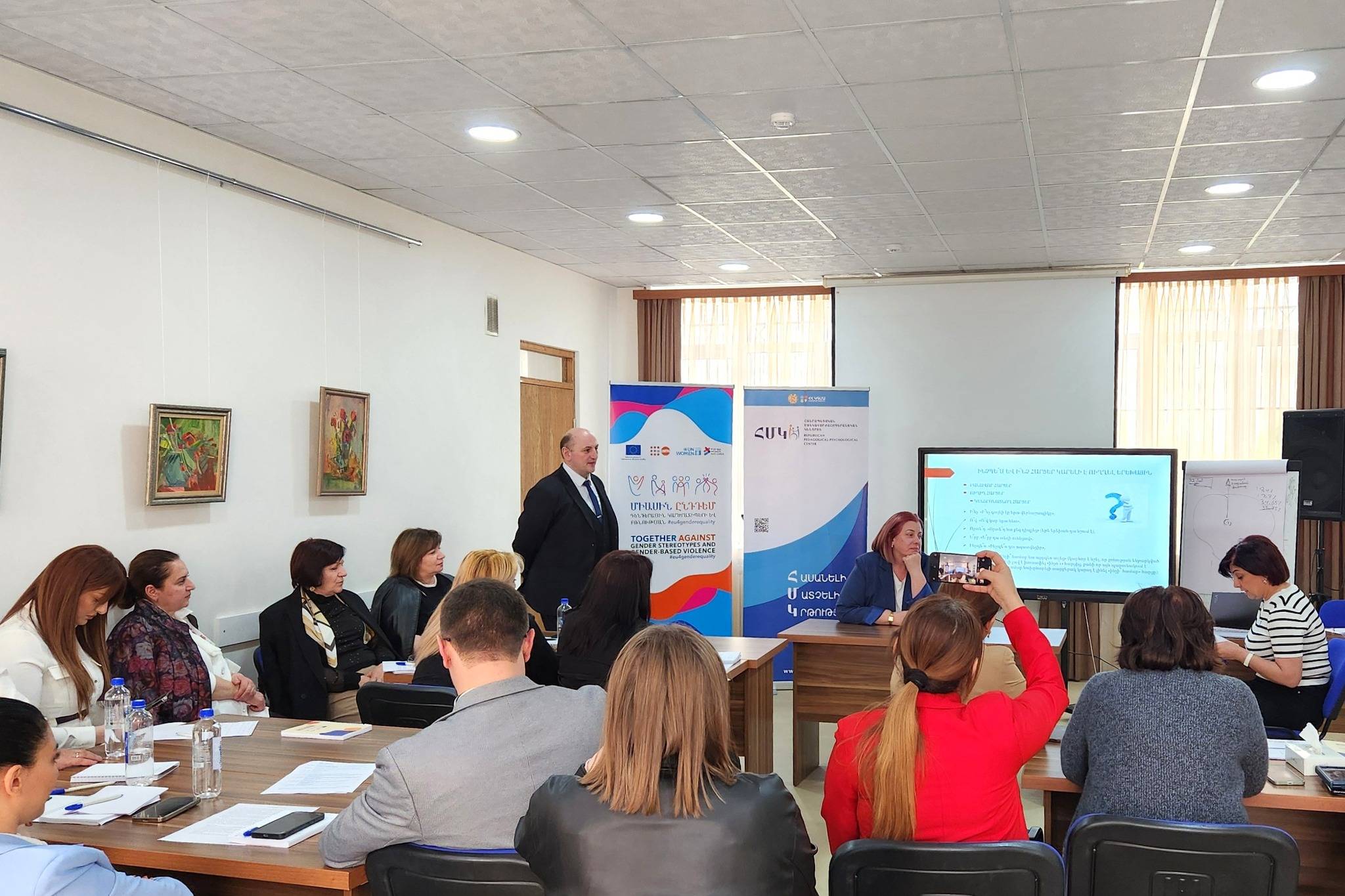

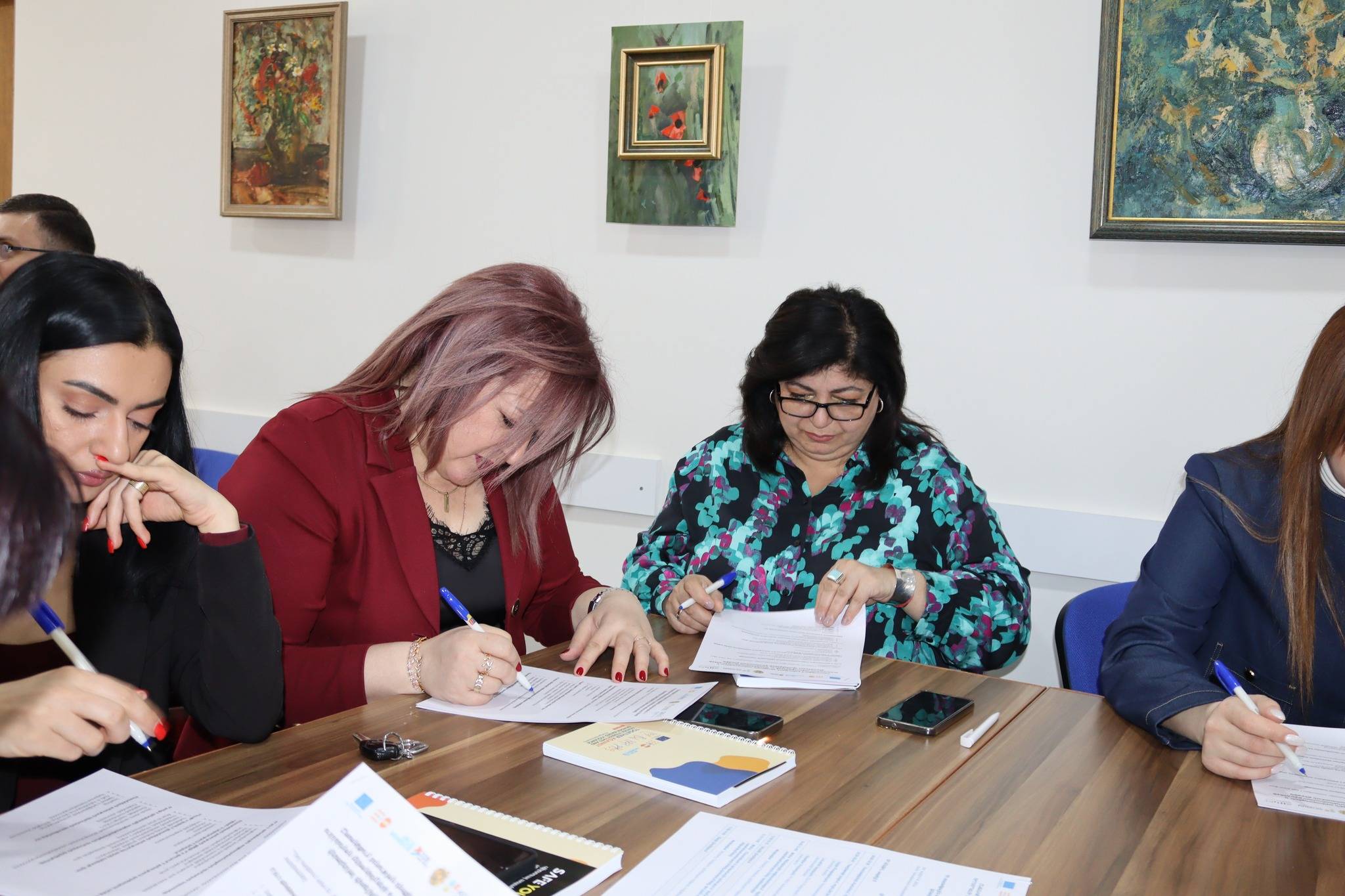

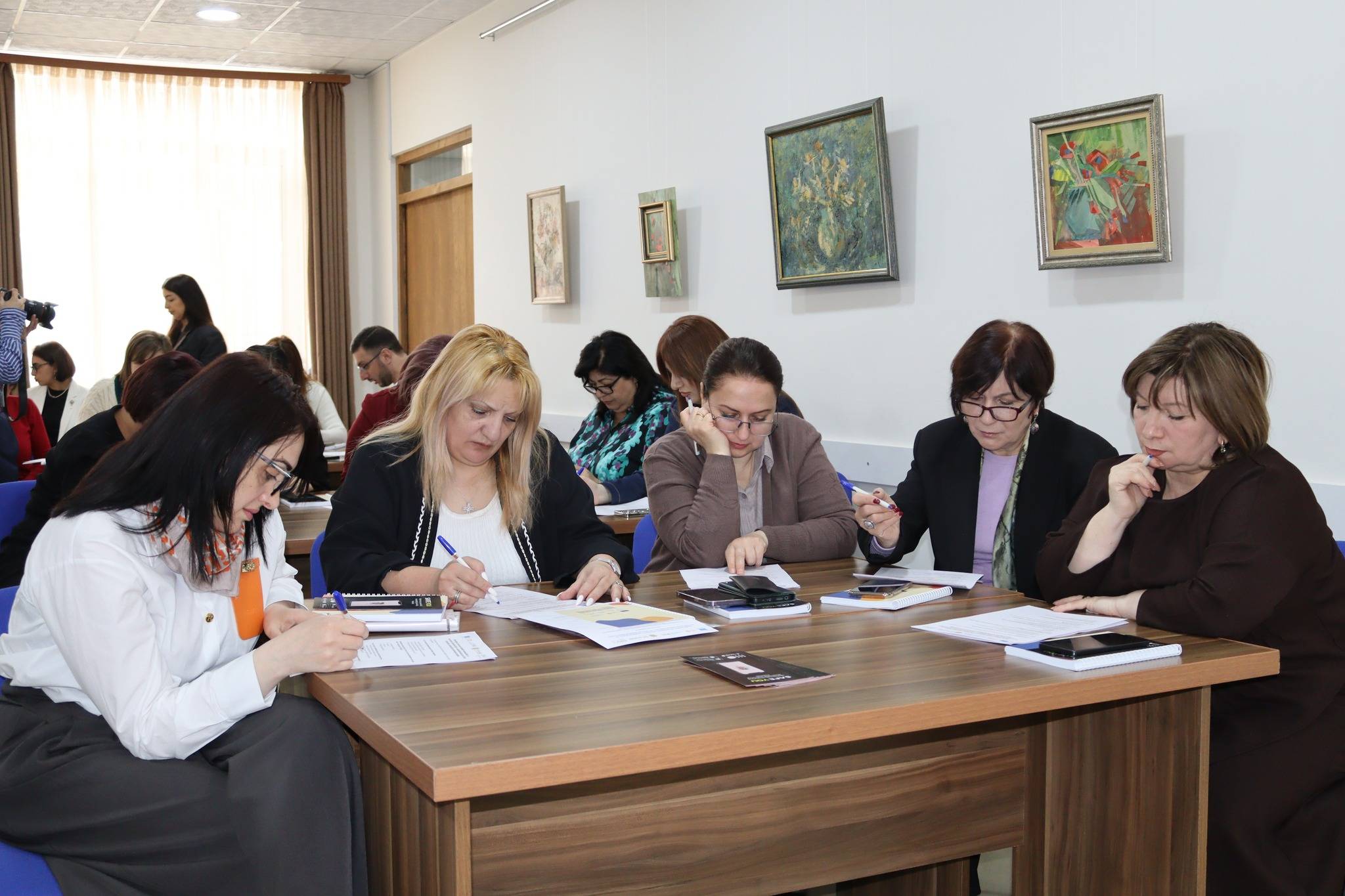

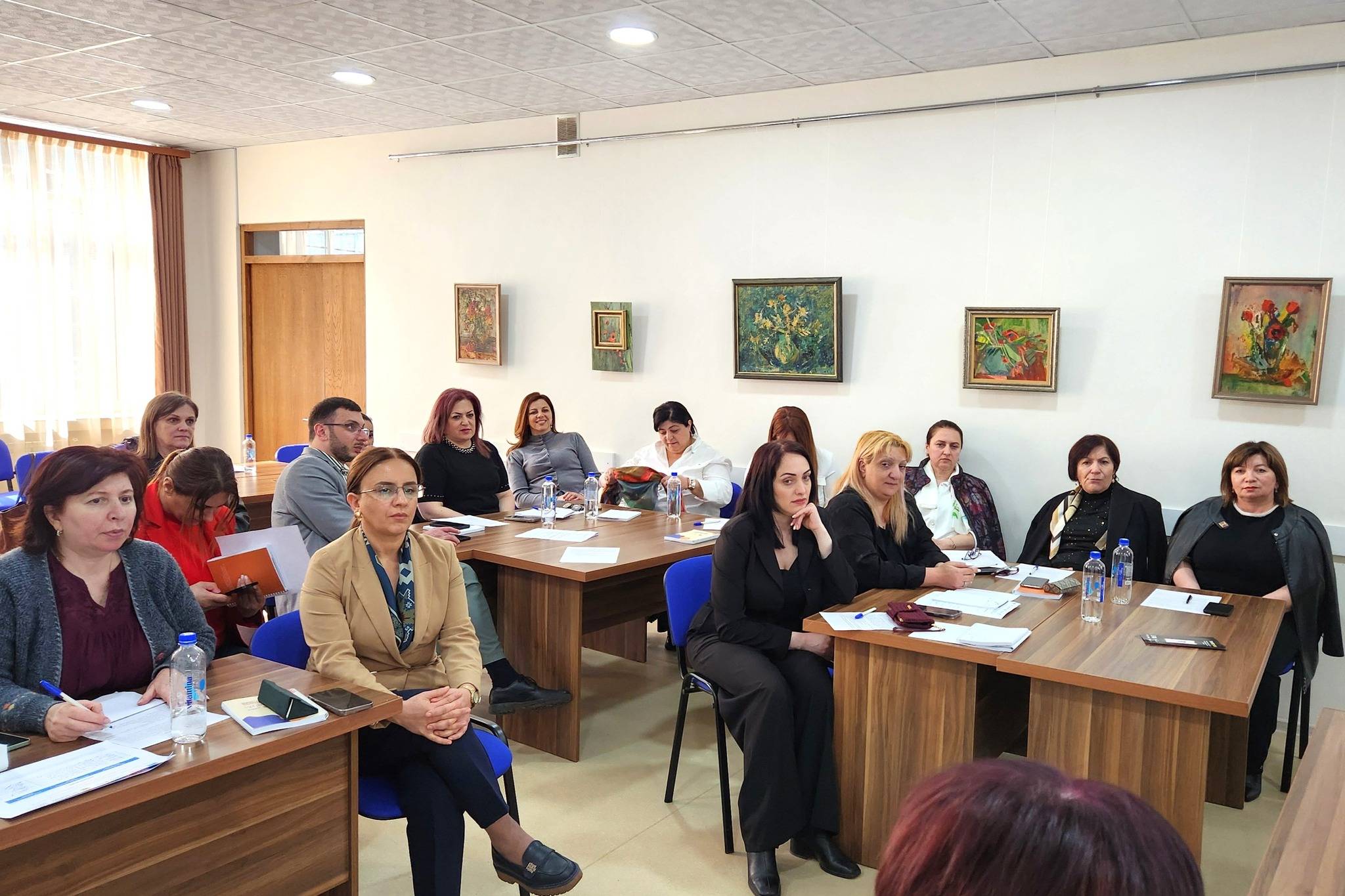

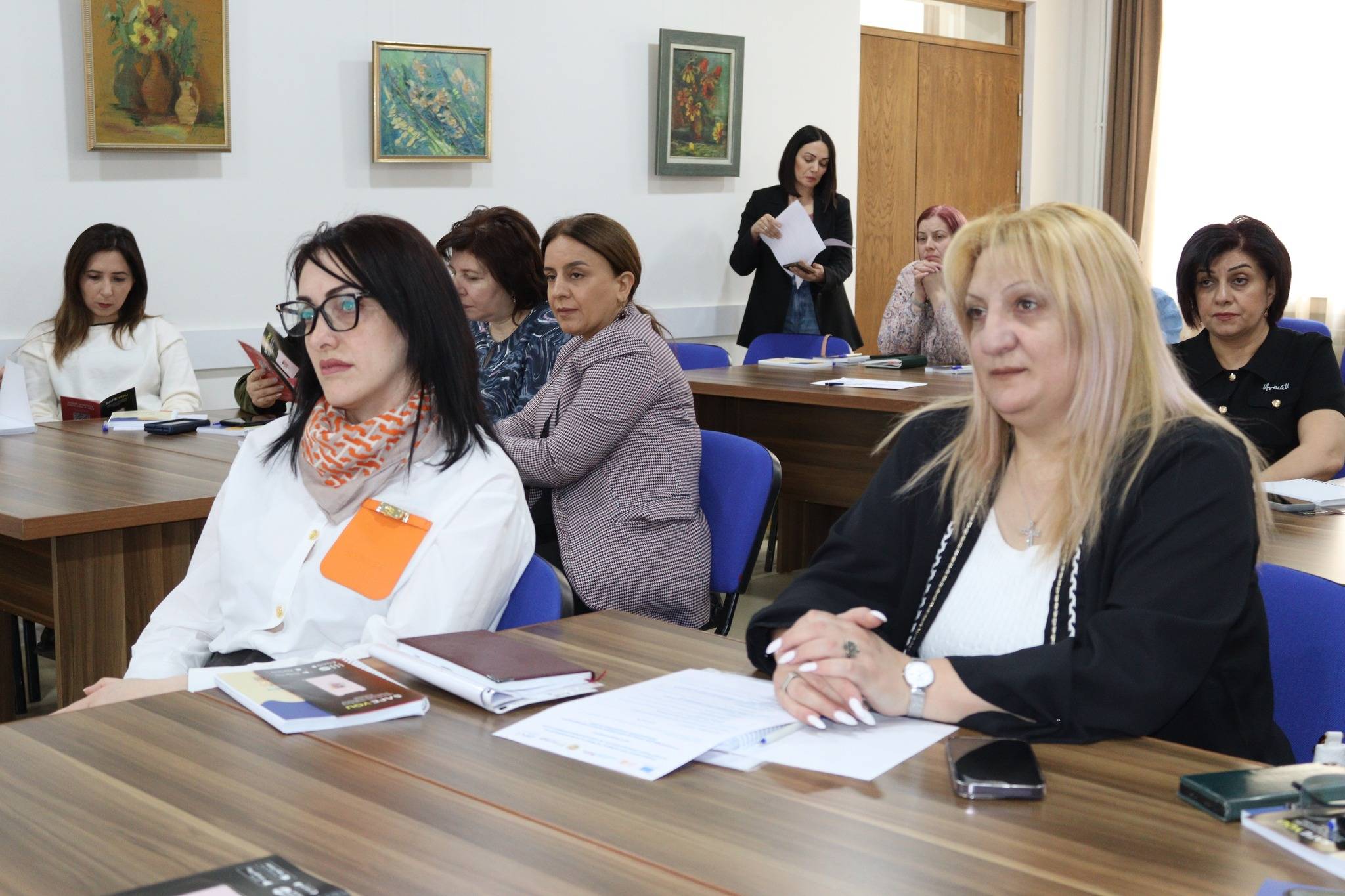

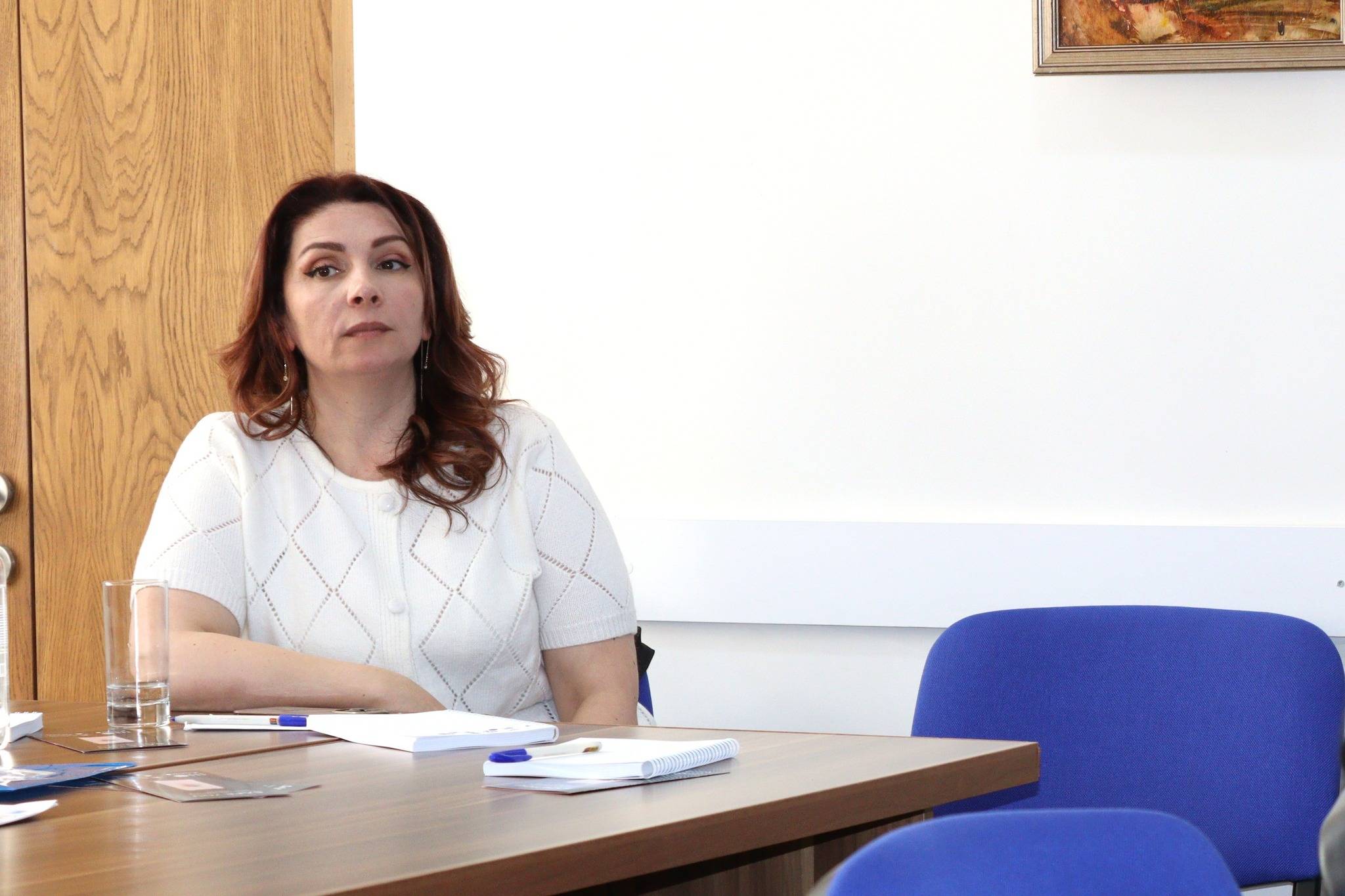



In cooperation with the Ministry of Education, Science, Culture and Sports of the Republic of Armenia, the Republican Pedagogical-Psychological Center and the United Nations Population Fund (UNFPA), a two-day training course on “MECHANISMS AND FEATURES OF RESPONDING TO AND DIRECTING INCIDENTS OF DOMESTIC VIOLENCE” was held on April 9-10, 2026, for the directors of Territorial Pedagogical-Psychological Sypport Centers of the Republic of Armenia. This initiative is being carried out within the framework of the second phase of the “EU 4 Gender Equality: Together Against Gender Stereotypes and Gender-Based Violence” Programme, funded by the European Union and implemented by UN Women and UNFPA. The aim of the Training Course was to provide effective mechanisms for identifying, responding to, and directing cases of domestic violence to specialists at TPPSCs and educational institutions through directors, thereby contributing to the development of their capacities.
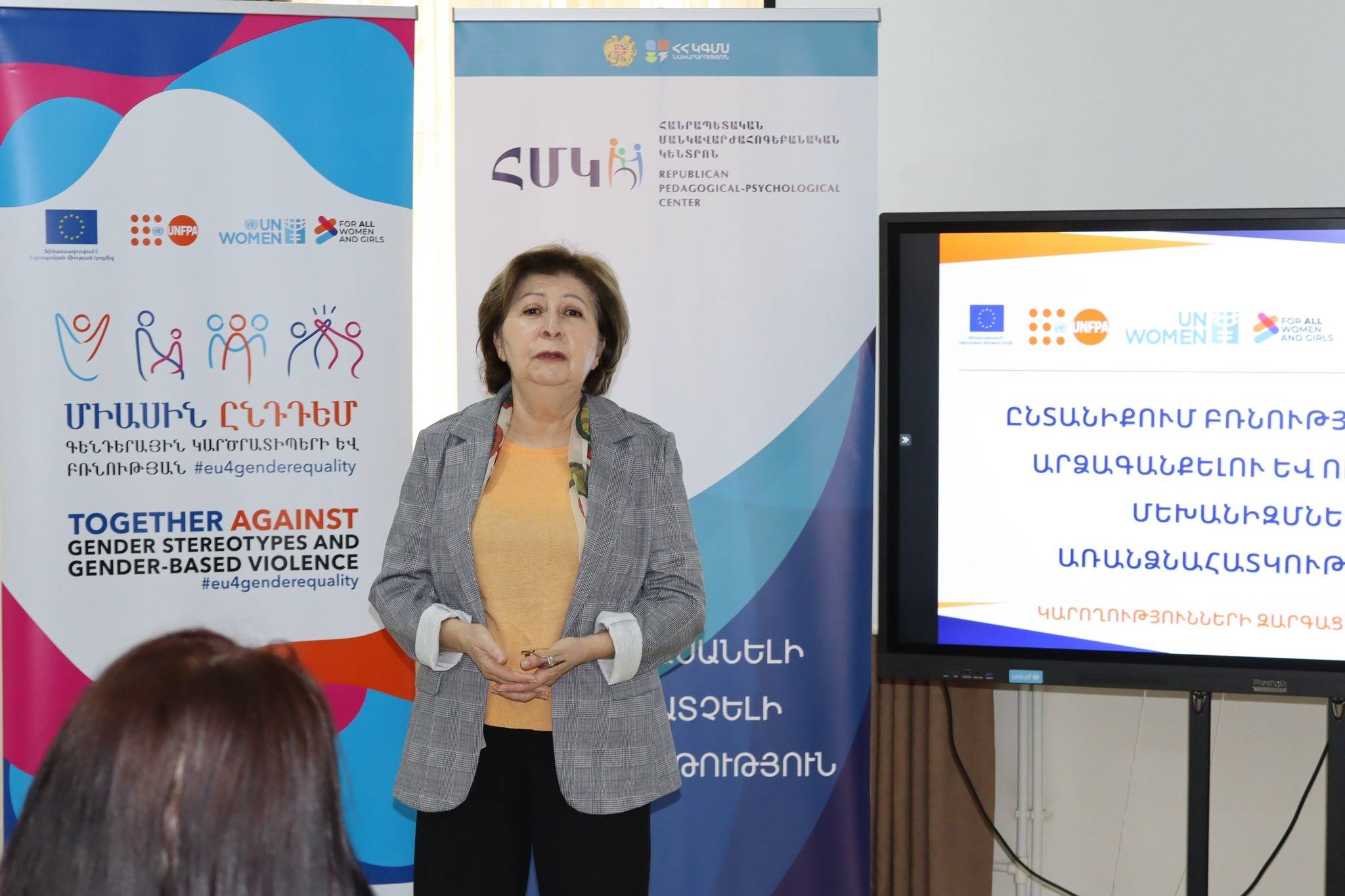
RPPC Director Lilit Mnatsakanyan, Chief Specialist at the Department of General Education of the MoESCS Anahit Muradyan, and Head of UNFPA Armenia Lusine Sargsyan delivered welcome speeches.
Considering the provision of a safe and secure educational environment as one of the State’s priorities, RPPC Director L. Mnatsakanyan attached importance to all the activities carried out within this framework, emphasizing the role and responsibility assumed by the UN Population Fund in this process (including the implementation of relevant studies and analyses, the formation of child protection (CP) teams, implementation of training courses, etc.). Mrs. Mnatsakanyan underscored the importance of developing and introducing response and referral mechanisms in various contexts, including the prevention of domestic and family violence.
In this regard, Lusine Sargsyan pointed out the significance of the collaborative work of various state institutions in order to reassess and clarify the tasks of each and to identify issues present within families. The need for phased implementation of training courses was also highlighted in order to raise the awareness of directors and enable them to equip specialists in their institutions with appropriate tools for response and referral.
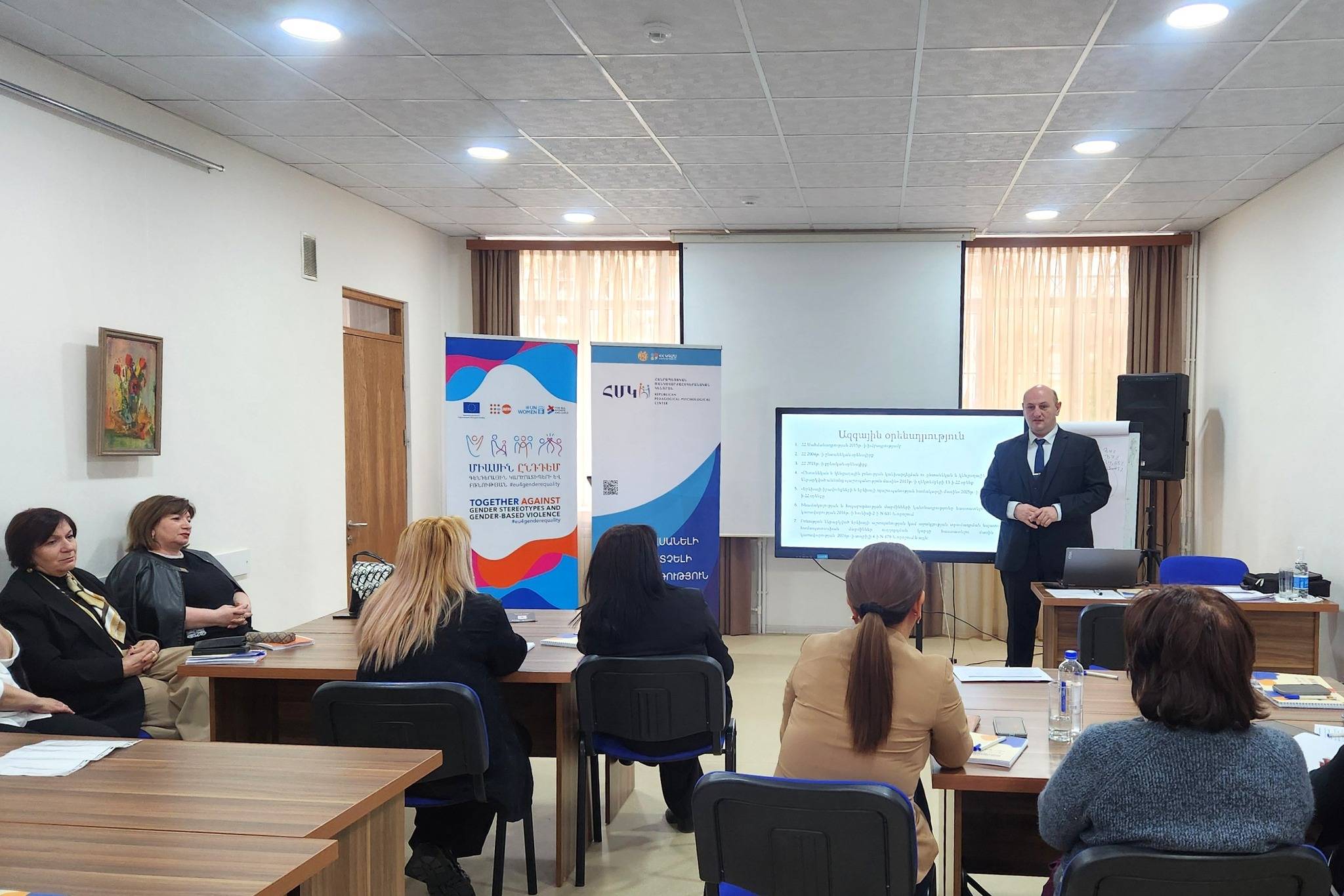
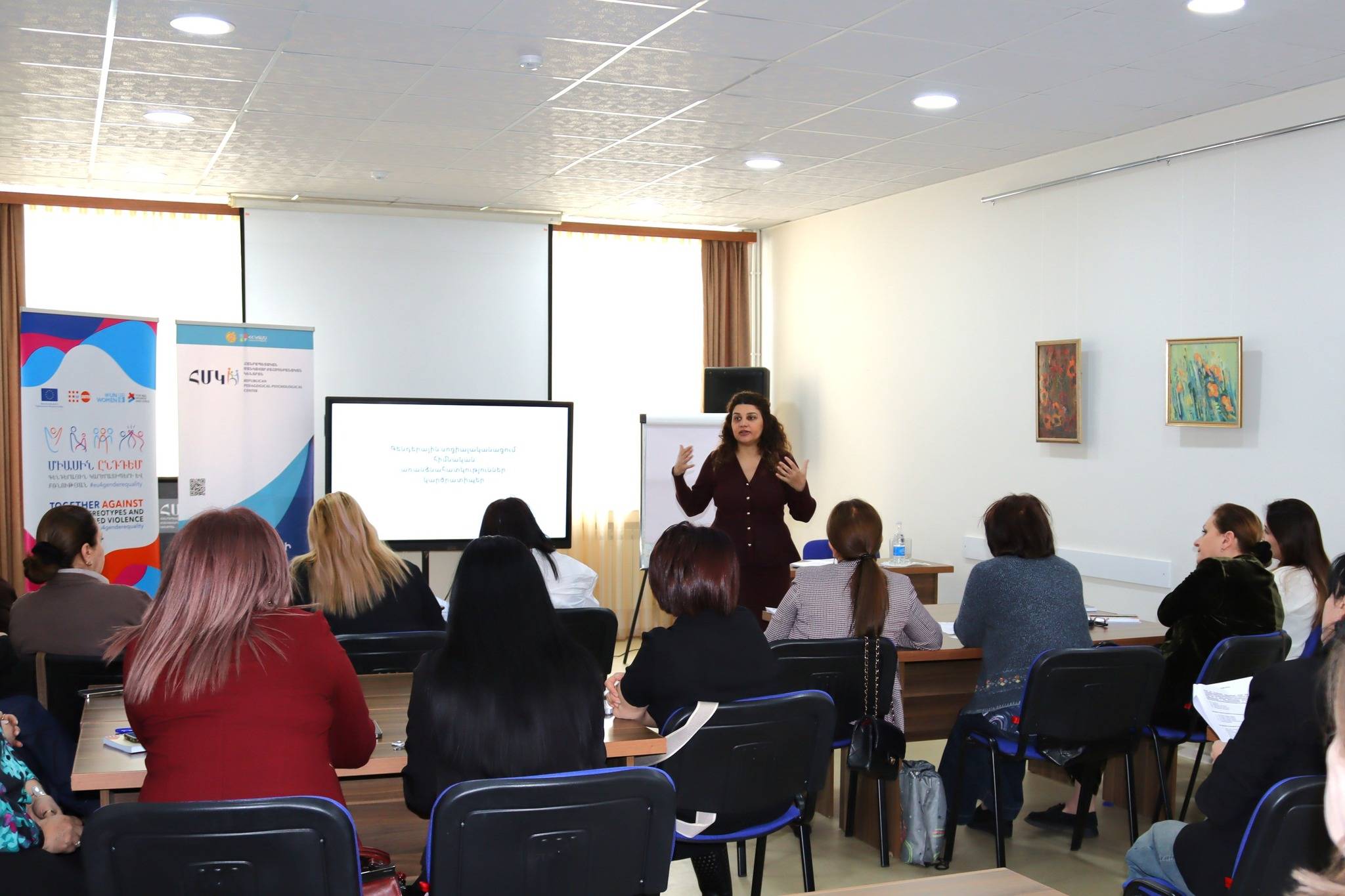
The trainers were experts Siranush Davtyan, a Clinical Psychologist and Psychotherapist, and David Tumasyan, PhD in Law, Associate Professor, Attorney. The key topics of the Training Course were related to the presentation of the psychological and legal aspects of domestic violence:
During the Training Course, the speakers drew attention to the challenges faced by individuals experiencing difficulties in gender socialization, mechanisms needed for identifying family and domestic violence, assessing its impact, and preventing its consequences. The Training Course was accompanied by case discussions and role-playing exercises, during which participants exchanged their observations, views, and professional experience.
13.04.2026