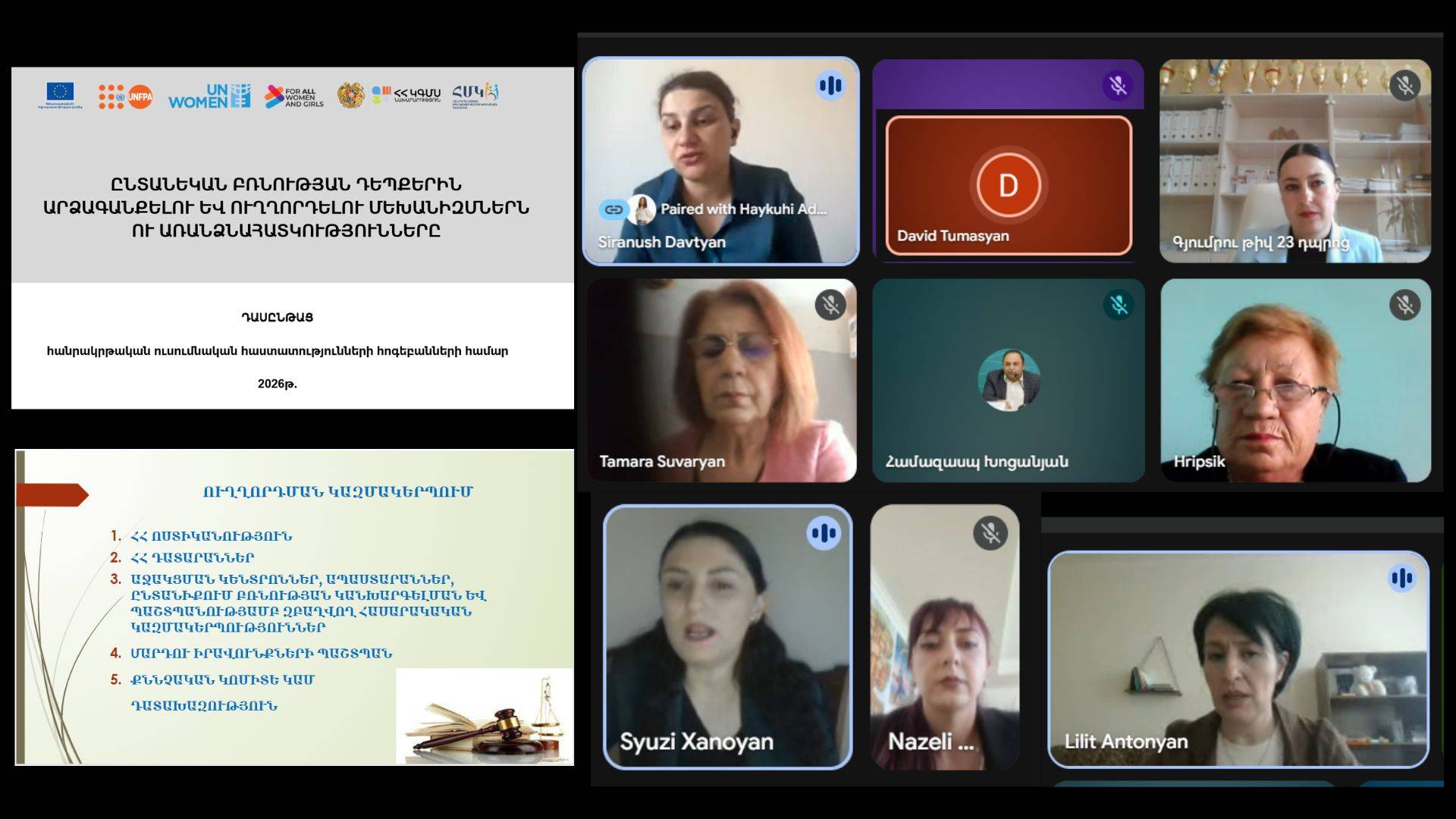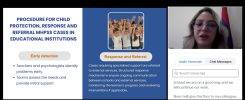
In cooperation with the Ministry of Education, Science, Culture and Sports of the Republic of Armenia, the Republican Pedagogical-Psychological Center, and the United Nations Population Fund (UNFPA) Armenia, online courses on the “MECHANISMS AND FEATURES OF RESPONDING TO AND DIRECTING INCIDENTS OF DOMESTIC VIOLENCE” topic were implemented from May 20 to June 2, 2026 for directors and psychologists of general education institutions in Shirak, Gegharkunik and Ararat marzes. The initiative is being carried out within the framework of the second phase of the “EU 4 Gender Equality: Together Against Gender Stereotypes and Gender-Based Violence” Programme, funded by the European Union in Armenia and implemented by UN Women Armenia and UNFPA.
The aim of the courses was to contribute to the development of the professional skills of directors and psychologists of general education institutions by providing them with effective mechanisms for identifying, responding to, and directing cases of domestic and family violence.
The courses were delivered by Clinical Psychologist and Psychotherapist Siranush Davtyan, PhD in Law, Associate Professor, Attorney Davit Tumasyan, as well as experienced trainers from the Republican Pedagogical-Psychological Center and Territorial Pedagogical-Psychological Support Centers. 300 directors and 277 psychologists of general education institutions participated in the courses.
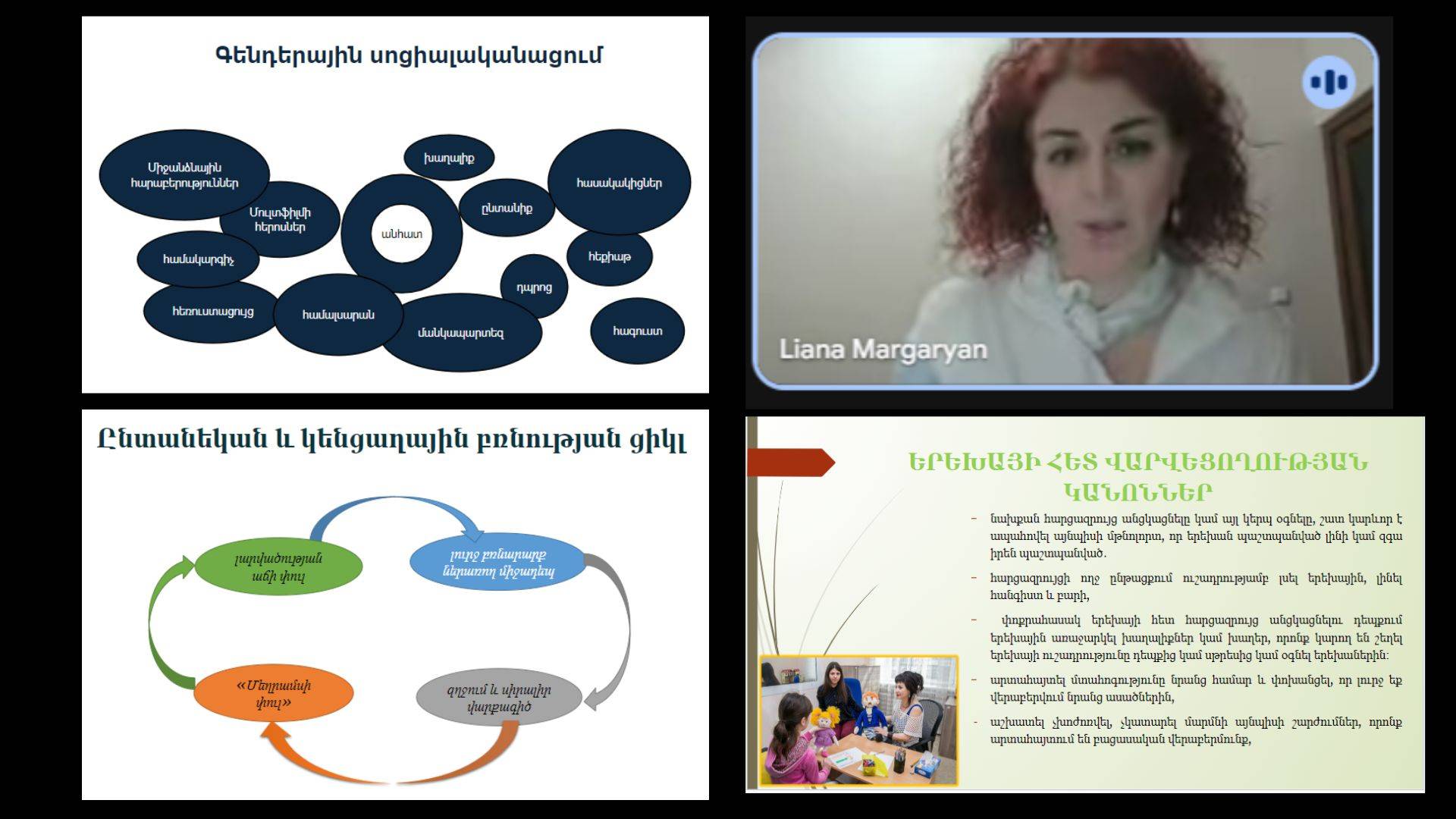
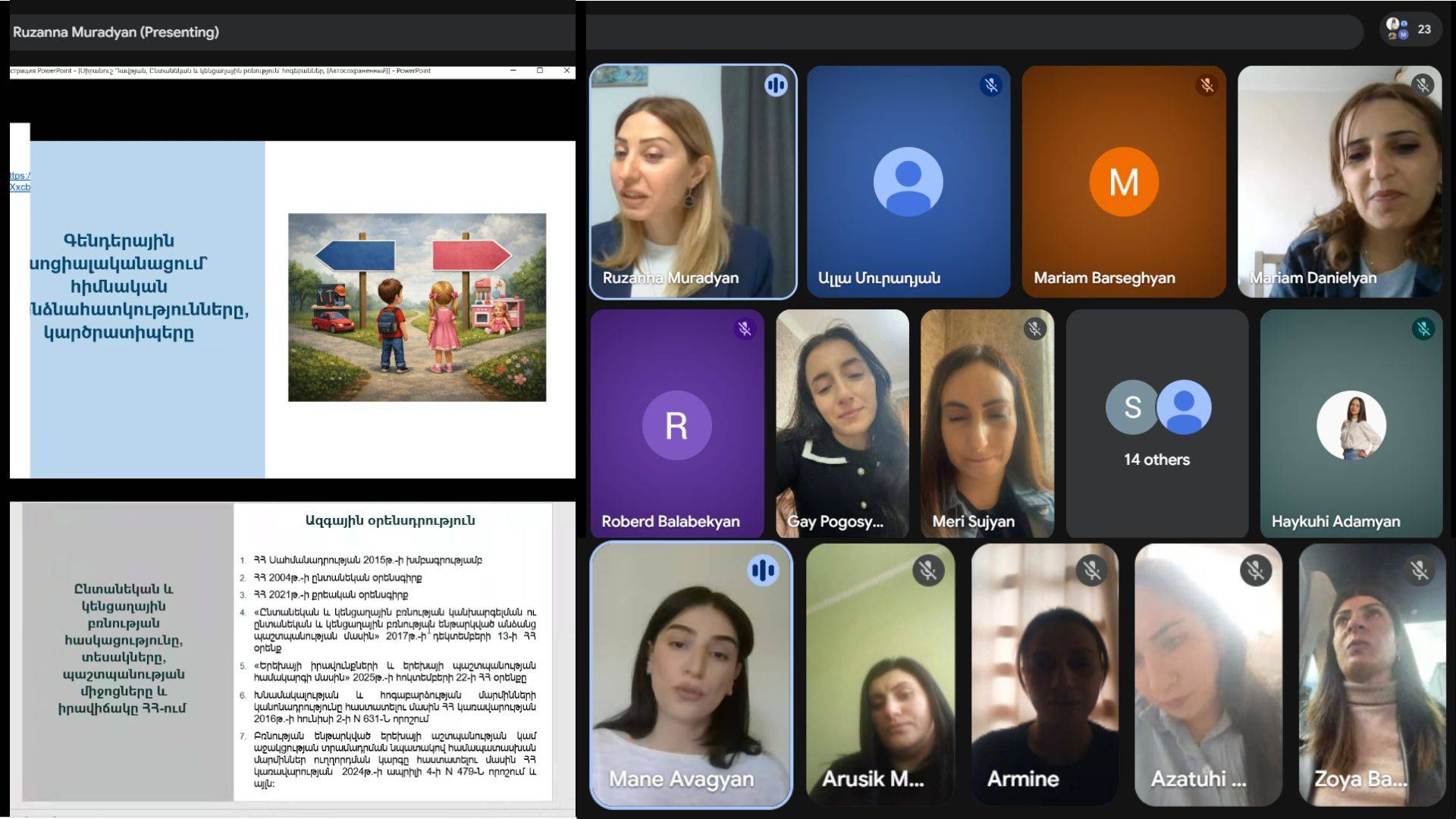
The participants were introduced to the legislative regulations of the Republic of Armenia on domestic and family violence, the functions and powers of state and community structures involved in the child protection system, as well as the role of general education institutions in the process of protecting children’s rights and ensuring a safe environment. The professional roles and responsibilities of the school director and psychologist in the context of detecting, preventing, and responding to cases of violence and interdepartmental cooperation were discussed. Particular attention was paid to the practical mechanisms for early detection of domestic violence, appropriate response and referral to specialized services.
The courses combined theoretical and practical components, enabling participants to discuss potential challenges through specific case studies, gaining practical skills for effective response to domestic and family violence cases.
04.06.2026